AI Avatar Video Free

AI Avatar Video Free — independent reviews, comparisons, pricing and step-by-step guides on Aizhi.

  • JAX (software)

    JAX (software)

    JAX is a Python library for accelerator-oriented array computation and program transformation, designed for high-performance numerical computing and large-scale machine learning. It is developed by Google with contributions from Nvidia and other community contributors. It is described as bringing together a modified version of the automatic differentiation system autograd and OpenXLA's XLA (Accelerated Linear Algebra). It is designed to follow the structure and workflow of NumPy as closely as possible and works with various existing frameworks such as TensorFlow and PyTorch. The primary features of JAX are: Providing a unified NumPy-like interface to computations that run on CPU, GPU, or TPU, in local or distributed settings. Built-in Just-In-Time (JIT) compilation via OpenXLA, an open-source machine learning compiler ecosystem. Efficient evaluation of gradients via its automatic differentiation transformations. Automatic vectorization to efficiently map functions over arrays representing batches of inputs. == Libraries using Jax == Flax Equinox Optax

    Read more →
  • Domain adaptation

    Domain adaptation

    Domain adaptation is a field associated with machine learning and transfer learning. It addresses the challenge of training a model on one data distribution (the source domain) and applying it to a related but different data distribution (the target domain). A common example is spam filtering, where a model trained on emails from one user (source domain) is adapted to handle emails for another user with significantly different patterns (target domain). Domain adaptation techniques can also leverage unrelated data sources to improve learning. When multiple source distributions are involved, the problem extends to multi-source domain adaptation. Domain adaptation is a specific type of transfer learning. According to the taxonomy laid out by Pan and Yang (2010), it falls into the category of transductive transfer learning. In this setting, the source and target tasks are the same (e.g., both are object recognition), but the domains differ (different marginal distributions). This distinguishes it from inductive transfer learning (where labeled data is available for the target task) and unsupervised transfer learning (where labels are unavailable in both domains). == Classification of domain adaptation problems == Domain adaptation setups are classified in two different ways: according to the distribution shift between the domains, and according to the available data from the target domain. === Distribution shifts === Common distribution shifts are classified as follows: Covariate Shift occurs when the input distributions of the source and destination change, but the relationship between inputs and labels remains unchanged. The above-mentioned spam filtering example typically falls in this category. Namely, the distributions (patterns) of emails may differ between the domains, but emails labeled as spam in the one domain should similarly be labeled in another. Prior Shift (Label Shift) occurs when the label distribution differs between the source and target datasets, while the conditional distribution of features given labels remains the same. An example is a classifier of hair color in images from Italy (source domain) and Norway (target domain). The proportions of hair colors (labels) differ, but images within classes like blond and black-haired populations remain consistent across domains. A classifier for the Norway population can exploit this prior knowledge of class proportions to improve its estimates. Concept Shift (Conditional Shift) refers to changes in the relationship between features and labels, even if the input distribution remains the same. For instance, in medical diagnosis, the same symptoms (inputs) may indicate entirely different diseases (labels) in different populations (domains). === Data available during training === Domain adaptation problems typically assume that some data from the target domain is available during training. Problems can be classified according to the type of this available data: Unsupervised: Unlabeled data from the target domain is available, but no labeled data. In the above-mentioned example of spam filtering, this corresponds to the case where emails from the target domain (user) are available, but they are not labeled as spam. Domain adaptation methods can benefit from such unlabeled data, by comparing its distribution (patterns) with the labeled source domain data. Semi-supervised: Most data that is available from the target domain is unlabelled, but some labeled data is also available. In the above-mentioned case of spam filter design, this corresponds to the case that the target user has labeled some emails as being spam or not. Supervised: All data that is available from the target domain is labeled. In this case, domain adaptation reduces to refinement of the source domain predictor. In the above-mentioned example classification of hair-color from images, this could correspond to the refinement of a network already trained on a large dataset of labeled images from Italy, using newly available labeled images from Norway. == Formalization == Let X {\displaystyle X} be the input space (or description space) and let Y {\displaystyle Y} be the output space (or label space). The objective of a machine learning algorithm is to learn a mathematical model (a hypothesis) h : X → Y {\displaystyle h:X\to Y} able to attach a label from Y {\displaystyle Y} to an example from X {\displaystyle X} . This model is learned from a learning sample S = { ( x i , y i ) ∈ ( X × Y ) } i = 1 m {\displaystyle S=\{(x_{i},y_{i})\in (X\times Y)\}_{i=1}^{m}} . Usually in supervised learning (without domain adaptation), we suppose that the examples ( x i , y i ) ∈ S {\displaystyle (x_{i},y_{i})\in S} are drawn i.i.d. from a distribution D S {\displaystyle D_{S}} of support X × Y {\displaystyle X\times Y} (unknown and fixed). The objective is then to learn h {\displaystyle h} (from S {\displaystyle S} ) such that it commits the least error possible for labelling new examples coming from the distribution D S {\displaystyle D_{S}} . The main difference between supervised learning and domain adaptation is that in the latter situation we study two different (but related) distributions D S {\displaystyle D_{S}} and D T {\displaystyle D_{T}} on X × Y {\displaystyle X\times Y} . The domain adaptation task then consists of the transfer of knowledge from the source domain D S {\displaystyle D_{S}} to the target one D T {\displaystyle D_{T}} . The goal is then to learn h {\displaystyle h} (from labeled or unlabelled samples coming from the two domains) such that it commits as little error as possible on the target domain D T {\displaystyle D_{T}} . The major issue is the following: if a model is learned from a source domain, what is its capacity to correctly label data coming from the target domain? == Four algorithmic principles == === Reweighting algorithms === The objective is to reweight the source labeled sample such that it "looks like" the target sample (in terms of the error measure considered). === Iterative algorithms === A method for adapting consists in iteratively "auto-labeling" the target examples. The principle is simple: a model h {\displaystyle h} is learned from the labeled examples; h {\displaystyle h} automatically labels some target examples; a new model is learned from the new labeled examples. Note that there exist other iterative approaches, but they usually need target labeled examples. === Search of a common representation space === The goal is to find or construct a common representation space for the two domains. The objective is to obtain a space in which the domains are close to each other while keeping good performances on the source labeling task. This can be achieved through the use of Adversarial machine learning techniques where feature representations from samples in different domains are encouraged to be indistinguishable. === Hierarchical Bayesian Model === The goal is to construct a Bayesian hierarchical model p ( n ) {\displaystyle p(n)} , which is essentially a factorization model for counts n {\displaystyle n} , to derive domain-dependent latent representations allowing both domain-specific and globally shared latent factors. == Software packages == Several compilations of domain adaptation and transfer learning algorithms have been implemented over the past decades: SKADA (Python) ADAPT (Python) TLlib (Python) Domain-Adaptation-Toolbox (MATLAB)

    Read more →
  • Adversarial machine learning

    Adversarial machine learning

    Adversarial machine learning is the study of the attacks on machine learning algorithms, and of the defenses against such attacks. Machine learning techniques are mostly designed to work on specific problem sets, under the assumption that the training and test data are generated from the same statistical distribution (IID). However, this assumption is often violated in practical high-stake applications, where users may intentionally supply fabricated data that violates the statistical assumption. Most common attacks in adversarial machine learning include evasion attacks, data poisoning attacks, Byzantine attacks and model extraction. == History == At the MIT Spam Conference in January 2004, John Graham-Cumming showed that a machine-learning spam filter could be used to defeat another machine-learning spam filter by automatically learning which words to add to a spam email to get the email classified as not spam. In 2004, Nilesh Dalvi and others noted that linear classifiers used in spam filters could be defeated by simple "evasion attacks" as spammers inserted "good words" into their spam emails. (Around 2007, some spammers added random noise to fuzz words within "image spam" in order to defeat OCR-based filters.) In 2006, Marco Barreno and others published "Can Machine Learning Be Secure?", outlining a broad taxonomy of attacks. As late as 2013 many researchers continued to hope that non-linear classifiers (such as support vector machines and neural networks) might be robust to adversaries, until Battista Biggio and others demonstrated the first gradient-based attacks on such machine-learning models (2012–2013). In 2012, deep neural networks began to dominate computer vision problems; starting in 2014, Christian Szegedy and others demonstrated that deep neural networks could be fooled by adversaries, again using a gradient-based attack to craft adversarial perturbations. Further work would show that adversarial attacks are harder to produce in uncontrolled environments, due to the different environmental constraints that cancel out the effect of noise. For example, any small rotation or slight illumination on an adversarial image can destroy the adversariality. In addition, researchers such as Google Brain's Nick Frosst point out that it is much easier to make self-driving cars miss stop signs by physically removing the sign itself, rather than creating adversarial examples. Frosst also believes that the adversarial machine learning community incorrectly assumes models trained on a certain data distribution will also perform well on a completely different data distribution. He suggests that a new approach to machine learning should be explored, and is currently working on a unique neural network that has characteristics more similar to human perception than state-of-the-art approaches. While adversarial machine learning continues to be heavily rooted in academia, large tech companies such as Google, Microsoft, and IBM have begun curating documentation and open source code bases to allow others to concretely assess the robustness of machine learning models and minimize the risk of adversarial attacks. === Examples === Examples include attacks in spam filtering, where spam messages are obfuscated through the misspelling of "bad" words or the insertion of "good" words; attacks in computer security, such as obfuscating malware code within network packets or modifying the characteristics of a network flow to mislead intrusion detection; attacks in biometric recognition where fake biometric traits may be exploited to impersonate a legitimate user; or to compromise users' template galleries that adapt to updated traits over time. Researchers showed that by changing only one-pixel it was possible to fool deep learning algorithms. Others 3-D printed a toy turtle with a texture engineered to make Google's object detection AI classify it as a rifle regardless of the angle from which the turtle was viewed. Creating the turtle required only low-cost commercially available 3-D printing technology. A machine-tweaked image of a dog was shown to look like a cat to both computers and humans. A 2019 study reported that humans can guess how machines will classify adversarial images. Researchers discovered methods for perturbing the appearance of a stop sign such that an autonomous vehicle classified it as a merge or speed limit sign. A data poisoning filter called Nightshade was released in 2023 by researchers at the University of Chicago. It was created for use by visual artists to put on their artwork to corrupt the data set of text-to-image models, which usually scrape their data from the internet without the consent of the image creator. McAfee attacked Tesla's former Mobileye system, fooling it into driving 50 mph over the speed limit, simply by adding a two-inch strip of black tape to a speed limit sign. Adversarial patterns on glasses or clothing designed to deceive facial-recognition systems or license-plate readers, have led to a niche industry of "stealth streetwear". An adversarial attack on a neural network can allow an attacker to inject algorithms into the target system. Researchers can also create adversarial audio inputs to disguise commands to intelligent assistants in benign-seeming audio; a parallel literature explores human perception of such stimuli. Clustering algorithms are used in security applications. Malware and computer virus analysis aims to identify malware families, and to generate specific detection signatures. In the context of malware detection, researchers have proposed methods for adversarial malware generation that automatically craft binaries to evade learning-based detectors while preserving malicious functionality. Optimization-based attacks such as GAMMA use genetic algorithms to inject benign content (for example, padding or new PE sections) into Windows executables, framing evasion as a constrained optimization problem that balances misclassification success with the size of the injected payload and showing transferability to commercial antivirus products. Complementary work uses generative adversarial networks (GANs) to learn feature-space perturbations that cause malware to be classified as benign; Mal-LSGAN, for instance, replaces the standard GAN loss with a least-squares objective and modified activation functions to improve training stability and produce adversarial malware examples that substantially reduce true positive rates across multiple detectors. == Challenges in applying machine learning to security == Researchers have observed that the constraints under which machine-learning techniques function in the security domain are different from those of common benchmark domains. Security data may change over time, include mislabeled samples, or reflect adversarial behavior, which complicates evaluation and reproducibility. === Data collection issues === Security datasets vary across formats, including binaries, network traces, and log files. Studies have reported that the process of converting these sources into features can introduce bias or inconsistencies. In addition, time-based leakage can occur when related malware samples are not properly separated across training and testing splits, which may lead to overly optimistic results. === Labeling and ground truth challenges === Malware labels are often unstable because different antivirus engines may classify the same sample in conflicting ways. Ceschin et al. note that families may be renamed or reorganized over time, causing further discrepancies in ground truth and reducing the reliability of benchmarks. === Concept drift === Because malware creators continuously adapt their techniques, the statistical properties of malicious samples also change. This form of concept drift has been widely documented and may reduce model performance unless systems are updated regularly or incorporate mechanisms for incremental learning. === Feature robustness === Researchers differentiate between features that can be easily manipulated and those that are more resistant to modification. For example, simple static attributes, such as header fields, may be altered by attackers, while structural features, such as control-flow graphs, are generally more stable but computationally expensive to extract. === Class imbalance === In realistic deployment environments, the proportion of malicious samples can be extremely low, ranging from 0.01% to 2% of total data. This unbalanced distribution causes models to develop a bias towards the majority class, achieving high accuracy but failing to identify malicious samples. Prior approaches to this problem have included both data-level solutions and sequence-specific models. Methods like n-gram and Long Short-Term Memory (LSTM) networks can model sequential data, but their performance has been shown to decline significantly when malware samples are realistically proportioned in the training set, demonstrating the limitations in

    Read more →
  • AI Overviews

    AI Overviews

    AI Overviews is an artificial intelligence (AI) feature integrated into Google Search that produces AI-generated summaries of search results. The feature has been criticized for its inaccuracy and for reducing website traffic. == History and development == AI Overviews were first introduced as part of Google's Search Generative Experience (SGE), which was unveiled at the Google I/O conference in May 2023. In May 2024 at Google I/O 2024, the feature was rebranded as AI Overviews and launched in the United States. The introduction of AI Overviews was seen as a strategic move to compete with other generative AI advancements, including OpenAI's ChatGPT. By August 2024, AI Overviews was rolled out to several other countries, including the United Kingdom, India, Japan, Brazil, Mexico, and Indonesia, with support for multiple languages. In October 2024, Google expanded the feature globally, making it available in over 100 countries. In December 2024, Botify x Demandsphere released findings stating that when AI Overviews and featured snippets appear together on the search engine results page, they take up approximately 67.1% of the screen on desktop and 75.7% on mobile. Even if content is ranking in the #1 position, it may not be visible to consumers if other visual elements on the results page are more prominent. In March 2025, Google started testing an "AI Mode", where the search results page is AI-generated. The company was also considering adding advertisements to the AI Mode, as they already exist in AI Overviews. As of May 2025, AI Overviews are available in over 200 countries and territories and in more than 40 languages. As of March 2026, Google AI Overviews appear on more than 48% of total Google Search queries, compared to just 6.49% in the previous year (58% year-over-year growth). == Functionality == The AI Overviews feature uses large language models to generate summaries from web content. The overviews are designed to be concise, providing a snapshot of relevant information about the queried topic. Google allows users to adjust the language complexity in summaries, offering both simplified and detailed options. The overviews also include links to sources. According to a June 2025 study by Semrush, the most cited source is Quora, followed by Reddit. == Reception == The feature has faced criticism for inaccuracies, including instances where erroneous or nonsensical content was generated. Depending on what is searched for, the overview may also consist of hallucinated content, such as when searching for idioms that do not exist. In May 2024, Google temporarily restricted the AI tool after it provided suggestions that were seen as nonsensical and harmful, such as telling users to eat rocks or apply glue on pizza. Concerns were also raised by content publishers, who feared a decline in web traffic as users relied on the summaries instead of visiting source websites. A Google patent from 2026 raised the concern of webmasters that Google could entirely replace the landing page of websites by an AI optimized copy of the website in its results. There is also apprehension about the ethical implications of AI-driven content aggregation, including its impact on intellectual property rights and the visibility of smaller content providers. The European Commission announced in December 2025 that they were investigating whether AI Overviews breached European competition law. In response, Google has stated its commitment to improve content validation and refine the algorithms used to filter unreliable information. Google implemented measures to prioritize link placement within AI Overviews, aiming to balance user convenience with the needs of content creators. In January 2026, Google restricted AI Overviews on certain health-related searches following an investigation by The Guardian. == Lawsuits == On February 24, 2025, Chegg sued Alphabet over the AI Overviews feature, claiming that it was leading to students preferring "low-quality, unverified AI summaries", thus violating antitrust law. Chegg also said it was considering either a sale or a take-private transaction. In September 2025, Penske Media Corporation, the publisher of Rolling Stone and The Hollywood Reporter, sued Google, claiming that AI Overviews illegally regurgitate content from their websites and drive off potential site visitors by always appearing on top of the search results while leaving little incentive to see the linked sources. The company stated that "the future of digital media and [...] its integrity [...] is threatened by Google's current actions", alleging that 20% of searches that link to Penske-owned websites show AI Overviews and that the figure is expected to rise. Google spokesperson José Castañeda called the claims "meritless" and stated that "AI Overviews send traffic to a greater diversity of sites." In 2026, Canadian musician Ashley MacIsaac filed a lawsuit against Google claiming that the AI Overview feature had wrongly stated that MacIsaac had been convicted of numerous criminal offences and was on the sex offender registry. He claims this incorrect information led to the cancellation of a December 2025 gig organized by the Sipekne'katik First Nation.

    Read more →
  • Fully probabilistic design

    Fully probabilistic design

    Decision making (DM) can be seen as a purposeful choice of action sequences. It also covers control, a purposeful choice of input sequences. As a rule, it runs under randomness, uncertainty and incomplete knowledge. A range of prescriptive theories have been proposed how to make optimal decisions under these conditions. They optimise sequence of decision rules, mappings of the available knowledge on possible actions. This sequence is called strategy or policy. Among various theories, Bayesian DM is broadly accepted axiomatically based theory that solves the design of optimal decision strategy. It describes random, uncertain or incompletely known quantities as random variables, i.e. by their joint probability expressing belief in their possible values. The strategy that minimises expected loss (or equivalently maximises expected reward) expressing decision-maker's goals is then taken as the optimal strategy. While the probabilistic description of beliefs is uniquely and deductively driven by rules for joint probabilities, the composition and decomposition of the loss function have no such universally applicable formal machinery. Fully probabilistic design (of decision strategies or control, FPD) removes the mentioned drawback and expresses also the DM goals of by the "ideal" probability, which assigns high (small) values to desired (undesired) behaviours of the closed DM loop formed by the influenced world part and by the used strategy. FPD has axiomatic basis and has Bayesian DM as its restricted subpart. FPD has a range of theoretical consequences , and, importantly, has been successfully used to quite diverse application domains.

    Read more →
  • Weak artificial intelligence

    Weak artificial intelligence

    Weak artificial intelligence (weak AI) is artificial intelligence that implements a limited part of the mind, or, as narrow AI, artificial narrow intelligence (ANI), is focused on one narrow task. Weak AI is contrasted with strong AI, which can be interpreted in various ways: Artificial general intelligence (AGI): a machine with the ability to apply intelligence to any problem, rather than just one specific problem. Artificial superintelligence (ASI): a machine with a vastly superior intelligence to the average human being. Artificial consciousness: a machine that has consciousness, sentience and mind (John Searle uses "strong AI" in this sense). Narrow AI can be classified as being "limited to a single, narrowly defined task. Most modern AI systems would be classified in this category." Artificial general intelligence is conversely the opposite. == Applications and risks == Some examples of narrow AI are AlphaGo, self-driving cars, robot systems used in the medical field, and diagnostic doctors. Narrow AI systems are sometimes dangerous if unreliable. And the behavior that it follows can become inconsistent. It could be difficult for the AI to grasp complex patterns and get to a solution that works reliably in various environments. This "brittleness" can cause it to fail in unpredictable ways. Narrow AI failures can sometimes have significant consequences. It could for example cause disruptions in the electric grid, damage nuclear power plants, cause global economic problems, and misdirect autonomous vehicles. Medicines could be incorrectly sorted and distributed. Also, medical diagnoses can ultimately have serious and sometimes deadly consequences if the AI is faulty or biased. Simple AI programs have already worked their way into society, oftentimes unnoticed by the public. Autocorrection for typing, speech recognition for speech-to-text programs, and vast expansions in the data science fields are examples. Narrow AI has also been the subject of some controversy, including resulting in unfair prison sentences, discrimination against women in the workplace for hiring, resulting in death via autonomous driving, among other cases. Despite being "narrow" AI, recommender systems are efficient at predicting user reactions based on their posts, patterns, or trends. For instance, TikTok's "For You" algorithm can determine a user's interests or preferences in less than an hour. Some other social media AI systems are used to detect bots that may be involved in propaganda or other potentially malicious activities. == Weak AI versus strong AI == John Searle contests the possibility of strong AI (by which he means conscious AI). He further believes that the Turing test (created by Alan Turing and originally called the "imitation game", used to assess whether a machine can converse indistinguishably from a human) is not accurate or appropriate for testing whether an AI is "strong". Scholars such as Antonio Lieto have argued that the current research on both AI and cognitive modelling are perfectly aligned with the weak-AI hypothesis (that should not be confused with the "general" vs "narrow" AI distinction) and that the popular assumption that cognitively inspired AI systems espouse the strong AI hypothesis is ill-posed and problematic since "artificial models of brain and mind can be used to understand mental phenomena without pretending that that they are the real phenomena that they are modelling" (as, on the other hand, implied by the strong AI assumption).

    Read more →
  • Self-supervised learning

    Self-supervised learning

    Self-supervised learning (SSL) is a paradigm in machine learning where a model is trained on a task using the data itself to generate supervisory signals, rather than relying on externally-provided labels. In the context of neural networks, self-supervised learning aims to leverage inherent structures or relationships within the input data to create meaningful training signals. SSL tasks are designed so that solving them requires capturing essential features or relationships in the data. The input data is typically augmented or transformed in a way that creates pairs of related samples, where one sample serves as the input, and the other is used to formulate the supervisory signal. This augmentation can involve introducing noise, cropping, rotation, or other transformations. Self-supervised learning more closely imitates the way humans learn to classify objects. During SSL, the model learns in two steps. First, the task is solved based on an auxiliary or pretext classification task using pseudo-labels, which help to initialize the model parameters. Next, the actual task is performed with supervised or unsupervised learning. Self-supervised learning has produced promising results in recent years, and has found practical application in fields such as audio processing, and is being used by Facebook and others for speech recognition. == Pseudo-labels == Pseudo-labels are automatically generated labels that a model assigns to unlabeled data based on its own predictions. They are widely used in self-supervised and semi-supervised learning, where ground-truth annotations are limited or unavailable. By treating predicted labels as surrogate ground truth, learning algorithms can make use of large quantities of unlabeled data in the training process. Pseudo-labeling also plays an important role in systems that must adapt to concept drift, where the statistical properties of the data change over time. In these scenarios, the model may detect that an incoming instance deviates from previously learned behavior. The system then generates a classification result for that instance, and this predicted class is used as a pseudo-label for updating or retraining model components that are becoming outdated. This approach enables continuous adaptation in dynamic environments without requiring manual annotation. In many adaptive learning pipelines, pseudo-labels are chosen when the classifier produces sufficiently confident predictions, reducing the risk of propagating errors. These pseudo-labeled instances are then incorporated into training to refresh or evolve the model's understanding of emerging data patterns, particularly when existing components show signs of “aging” due to drift or distributional shifts. This strategy reduces reliance on manual labeling while helping maintain long-term model performance. == Types == === Autoassociative self-supervised learning === Autoassociative self-supervised learning is a specific category of self-supervised learning where a neural network is trained to reproduce or reconstruct its own input data. In other words, the model is tasked with learning a representation of the data that captures its essential features or structure, allowing it to regenerate the original input. The term "autoassociative" comes from the fact that the model is essentially associating the input data with itself. This is often achieved using autoencoders, which are a type of neural network architecture used for representation learning. Autoencoders consist of an encoder network that maps the input data to a lower-dimensional representation (latent space), and a decoder network that reconstructs the input from this representation. The training process involves presenting the model with input data and requiring it to reconstruct the same data as closely as possible. The loss function used during training typically penalizes the difference between the original input and the reconstructed output (e.g. mean squared error). By minimizing this reconstruction error, the autoencoder learns a meaningful representation of the data in its latent space. === Contrastive self-supervised learning === For a binary classification task, training data can be divided into positive examples and negative examples. Positive examples are those that match the target. For example, if training a classifier to identify birds, the positive training data would include images that contain birds. Negative examples would be images that do not. Contrastive self-supervised learning uses both positive and negative examples. The loss function in contrastive learning is used to minimize the distance between positive sample pairs, while maximizing the distance between negative sample pairs. An early example uses a pair of 1-dimensional convolutional neural networks to process a pair of images and maximize their agreement. Contrastive Language-Image Pre-training (CLIP) allows joint pretraining of a text encoder and an image encoder, such that a matching image-text pair have image encoding vector and text encoding vector that span a small angle (having a large cosine similarity). InfoNCE (Noise-Contrastive Estimation) is a method to optimize two models jointly, based on Noise Contrastive Estimation (NCE). Given a set X = { x 1 , … x N } {\displaystyle X=\left\{x_{1},\ldots x_{N}\right\}} of N {\displaystyle N} random samples containing one positive sample from p ( x t + k ∣ c t ) {\displaystyle p\left(x_{t+k}\mid c_{t}\right)} and N − 1 {\displaystyle N-1} negative samples from the 'proposal' distribution p ( x t + k ) {\displaystyle p\left(x_{t+k}\right)} , it minimizes the following loss function: L N = − E X [ log ⁡ f k ( x t + k , c t ) ∑ x j ∈ X f k ( x j , c t ) ] {\displaystyle {\mathcal {L}}_{\mathrm {N} }=-\mathbb {E} _{X}\left[\log {\frac {f_{k}\left(x_{t+k},c_{t}\right)}{\sum _{x_{j}\in X}f_{k}\left(x_{j},c_{t}\right)}}\right]} === Non-contrastive self-supervised learning === Non-contrastive self-supervised learning (NCSSL) uses only positive examples. Counterintuitively, NCSSL converges on a useful local minimum rather than reaching a trivial solution, with zero loss. For the example of binary classification, it would trivially learn to classify each example as positive. Effective NCSSL requires an extra predictor on the online side that does not back-propagate on the target side. === Joint-Embedding and Predictive Architectures === A major class of self-supervised learning moves beyond contrastive pairs, instead maximizing the agreement between views while preventing collapse through statistical constraints. Rooted in Deep Canonical Correlation Analysis (Deep CCA), this approach includes Joint-Embedding Architectures (JEA) like Barlow Twins and VICReg, which enforce covariance constraints to learn invariant representations without negative sampling. Deep Latent Variable Path Modelling (DLVPM) generalizes this to multimodal systems, using path models to enforce correlation and orthogonality across diverse data types. In 2022 Yann LeCun introduced Joint-Embedding Predictive Architectures (JEPA) as a step towards decision making, reasoning, and autonomous human intelligence in machines, including self-improvement through autonomous learning. Founded in representation learning, LeCun included the concept of a “world model” in JEPA which aims to enable machines to replicate human intellect by providing machines with a concept for the world in which they exist. Unlike autoencoders, JEPAs operate entirely in latent space, avoiding pixel-level noise to focus on semantic structure. Rather than just learning invariance, JEPAs learn by predicting masked latent representations from visible context. JEPA has been applied to domains such as image analysis, audio processing, and motion in images and video. == Comparison with other forms of machine learning == SSL belongs to supervised learning methods insofar as the goal is to generate a classified output from the input. At the same time, however, it does not require the explicit use of labeled input-output pairs. Instead, correlations, metadata embedded in the data, or domain knowledge present in the input are implicitly and autonomously extracted from the data. These supervisory signals, extracted from the data, can then be used for training. SSL is similar to unsupervised learning in that it does not require labels in the sample data. Unlike unsupervised learning, however, learning is not done using inherent data structures. Semi-supervised learning combines supervised and unsupervised learning, requiring only a small portion of the learning data be labeled. In transfer learning, a model designed for one task is reused on a different task. Training an autoencoder intrinsically constitutes a self-supervised process, because the output pattern needs to become an optimal reconstruction of the input pattern itself. However, in current jargon, the term 'self-supervised' often refers to tasks based on a pretext-task training setup

    Read more →
  • Case-based reasoning

    Case-based reasoning

    Case-based reasoning (CBR), broadly construed, is the process of solving new problems based on the solutions of similar past problems. In everyday life, an auto mechanic who fixes an engine by recalling another car that exhibited similar symptoms is using case-based reasoning. A lawyer who advocates a particular outcome in a trial based on legal precedents or a judge who creates case law is using case-based reasoning. So, too, an engineer copying working elements of nature (practicing biomimicry) is treating nature as a database of solutions to problems. Case-based reasoning is a prominent type of analogy solution making. It has been argued that case-based reasoning is not only a powerful method for computer reasoning, but also a pervasive behavior in everyday human problem solving; or, more radically, that all reasoning is based on past cases personally experienced. This view is related to prototype theory, which is most deeply explored in cognitive science. == Process == Case-based reasoning has been formalized for purposes of computer reasoning as a four-step process: Retrieve: Given a target problem, retrieve cases relevant to solving it from memory. A case consists of a problem, its solution, and, typically, annotations about how the solution was derived. For example, suppose Fred wants to prepare blueberry pancakes. Being a novice cook, the most relevant experience he can recall is one in which he successfully made plain pancakes. The procedure he followed for making the plain pancakes, together with justifications for decisions made along the way, constitutes Fred's retrieved case. Reuse: Map the solution from the previous case to the target problem. This may involve adapting the solution as needed to fit the new situation. In the pancake example, Fred must adapt his retrieved solution to include the addition of blueberries. Revise: Having mapped the previous solution to the target situation, test the new solution in the real world (or a simulation) and, if necessary, revise. Suppose Fred adapted his pancake solution by adding blueberries to the batter. After mixing, he discovers that the batter has turned blue – an undesired effect. This suggests the following revision: delay the addition of blueberries until after the batter has been ladled into the pan. Retain: After the solution has been successfully adapted to the target problem, store the resulting experience as a new case in memory. Fred, accordingly, records his new-found procedure for making blueberry pancakes, thereby enriching his set of stored experiences, and better preparing him for future pancake-making demands. == Comparison to other methods == At first glance, CBR may seem similar to the rule induction algorithms of machine learning. Like a rule-induction algorithm, CBR starts with a set of cases or training examples; it forms generalizations of these examples, albeit implicit ones, by identifying commonalities between a retrieved case and the target problem. If for instance a procedure for plain pancakes is mapped to blueberry pancakes, a decision is made to use the same basic batter and frying method, thus implicitly generalizing the set of situations under which the batter and frying method can be used. The key difference, however, between the implicit generalization in CBR and the generalization in rule induction lies in when the generalization is made. A rule-induction algorithm draws its generalizations from a set of training examples before the target problem is even known; that is, it performs eager generalization. For instance, if a rule-induction algorithm were given recipes for plain pancakes, Dutch apple pancakes, and banana pancakes as its training examples, it would have to derive, at training time, a set of general rules for making all types of pancakes. It would not be until testing time that it would be given, say, the task of cooking blueberry pancakes. The difficulty for the rule-induction algorithm is in anticipating the different directions in which it should attempt to generalize its training examples. This is in contrast to CBR, which delays (implicit) generalization of its cases until testing time – a strategy of lazy generalization. In the pancake example, CBR has already been given the target problem of cooking blueberry pancakes; thus it can generalize its cases exactly as needed to cover this situation. CBR therefore tends to be a good approach for rich, complex domains in which there are myriad ways to generalize a case. In law, there is often explicit delegation of CBR to courts, recognizing the limits of rule based reasons: limiting delay, limited knowledge of future context, limit of negotiated agreement, etc. While CBR in law and cognitively inspired CBR have long been associated, the former is more clearly an interpolation of rule based reasoning, and judgment, while the latter is more closely tied to recall and process adaptation. The difference is clear in their attitude toward error and appellate review. Another name for case-based reasoning in problem solving is symptomatic strategies. It does require à priori domain knowledge that is gleaned from past experience which established connections between symptoms and causes. This knowledge is referred to as shallow, compiled, evidential, history-based as well as case-based knowledge. This is the strategy most associated with diagnosis by experts. Diagnosis of a problem transpires as a rapid recognition process in which symptoms evoke appropriate situation categories. An expert knows the cause by virtue of having previously encountered similar cases. Case-based reasoning is the most powerful strategy, and that used most commonly. However, the strategy won't work independently with truly novel problems, or where deeper understanding of whatever is taking place is sought. An alternative approach to problem solving is the topographic strategy which falls into the category of deep reasoning. With deep reasoning, in-depth knowledge of a system is used. Topography in this context means a description or an analysis of a structured entity, showing the relations among its elements. Also known as reasoning from first principles, deep reasoning is applied to novel faults when experience-based approaches aren't viable. The topographic strategy is therefore linked to à priori domain knowledge that is developed from a more a fundamental understanding of a system, possibly using first-principles knowledge. Such knowledge is referred to as deep, causal or model-based knowledge. Hoc and Carlier noted that symptomatic approaches may need to be supported by topographic approaches because symptoms can be defined in diverse terms. The converse is also true – shallow reasoning can be used abductively to generate causal hypotheses, and deductively to evaluate those hypotheses, in a topographical search. == Criticism == Critics of CBR argue that it is an approach that accepts anecdotal evidence as its main operating principle. Without statistically relevant data for backing and implicit generalization, there is no guarantee that the generalization is correct. However, all inductive reasoning where data is too scarce for statistical relevance is inherently based on anecdotal evidence. == History == CBR traces its roots to the work of Roger Schank and his students at Yale University in the early 1980s. Schank's model of dynamic memory was the basis for the earliest CBR systems: Janet Kolodner's CYRUS and Michael Lebowitz's IPP. Other schools of CBR and closely allied fields emerged in the 1980s, which directed at topics such as legal reasoning, memory-based reasoning (a way of reasoning from examples on massively parallel machines), and combinations of CBR with other reasoning methods. In the 1990s, interest in CBR grew internationally, as evidenced by the establishment of an International Conference on Case-Based Reasoning in 1995, as well as European, German, British, Italian, and other CBR workshops. CBR technology has resulted in the deployment of a number of successful systems, the earliest being Lockheed's CLAVIER, a system for laying out composite parts to be baked in an industrial convection oven. CBR has been used extensively in applications such as the Compaq SMART system and has found a major application area in the health sciences, as well as in structural safety management. There is recent work that develops CBR within a statistical framework and formalizes case-based inference as a specific type of probabilistic inference. Thus, it becomes possible to produce case-based predictions equipped with a certain level of confidence. One description of the difference between CBR and induction from instances is that statistical inference aims to find what tends to make cases similar while CBR aims to encode what suffices to claim similarly.

    Read more →
  • Scene text

    Scene text

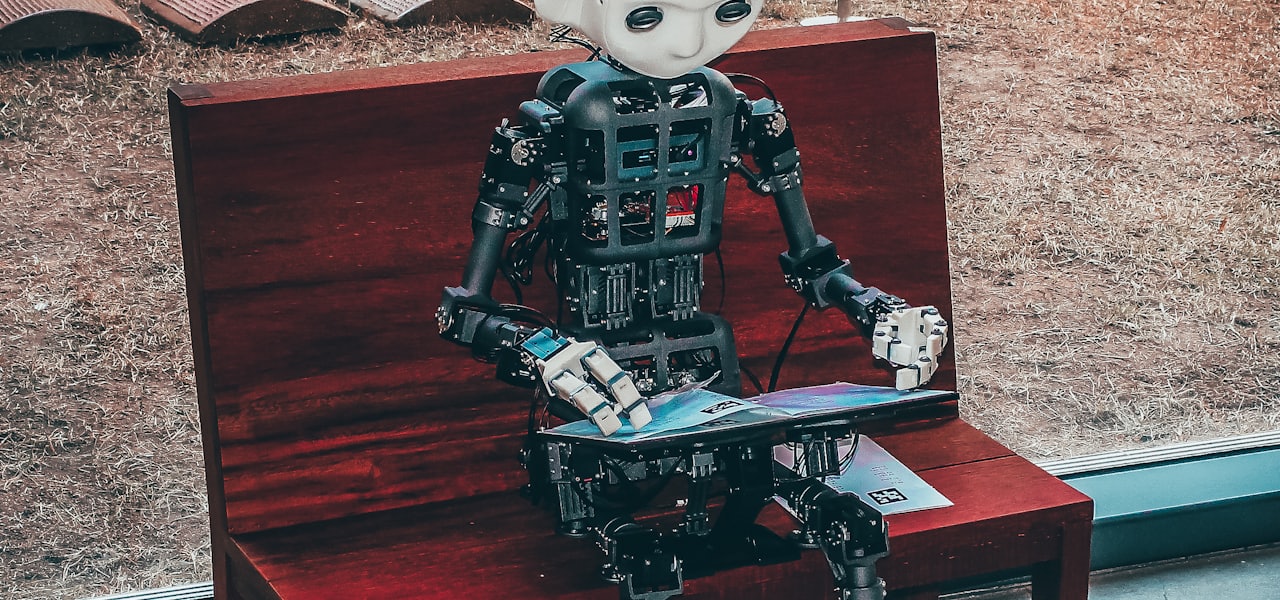
    Scene text is text that appears in an image captured by a camera in an outdoor environment. The detection and recognition of scene text from camera captured images are computer vision tasks which became important after smart phones with good cameras became ubiquitous. The text in scene images varies in shape, font, colour and position. The recognition of scene text is further complicated sometimes by non-uniform illumination and focus. To improve scene text recognition, the International Conference on Document Analysis and Recognition (ICDAR) conducts a robust reading competition once in two years. The competition was held in 2003, 2005 and during every ICDAR conference. International association for pattern recognition (IAPR) has created a list of datasets as Reading systems. == Text detection == Text detection is the process of detecting the text present in the image, followed by surrounding it with a rectangular bounding box. Text detection can be carried out using image based techniques or frequency based techniques. In image based techniques, an image is segmented into multiple segments. Each segment is a connected component of pixels with similar characteristics. The statistical features of connected components are utilised to group them and form the text. Machine learning approaches such as support vector machine and convolutional neural networks are used to classify the components into text and non-text. In frequency based techniques, discrete Fourier transform (DFT) or discrete wavelet transform (DWT) are used to extract the high frequency coefficients. It is assumed that the text present in an image has high frequency components and selecting only the high frequency coefficients filters the text from the non-text regions in an image. == Word recognition == In word recognition, the text is assumed to be already detected and located and the rectangular bounding box containing the text is available. The word present in the bounding box needs to be recognized. The methods available to perform word recognition can be broadly classified into top-down and bottom-up approaches. In the top-down approaches, a set of words from a dictionary is used to identify which word suits the given image. Images are not segmented in most of these methods. Hence, the top-down approach is sometimes referred as segmentation free recognition. In the bottom-up approaches, the image is segmented into multiple components and the segmented image is passed through a recognition engine. Either an off the shelf Optical character recognition (OCR) engine or a custom-trained one is used to recognise the text.

    Read more →
  • Actor-critic algorithm

    Actor-critic algorithm

    The actor-critic algorithm (AC) is a family of reinforcement learning (RL) algorithms that combine policy-based RL algorithms such as policy gradient methods, and value-based RL algorithms such as value iteration, Q-learning, SARSA, and TD learning. An AC algorithm consists of two main components: an "actor" that determines which actions to take according to a policy function, and a "critic" that evaluates those actions according to a value function. Some AC algorithms are on-policy, some are off-policy. Some apply to either continuous or discrete action spaces. Some work in both cases. == Overview == The actor-critic methods can be understood as an improvement over pure policy gradient methods like REINFORCE via introducing a baseline. === Actor === The actor uses a policy function π ( a | s ) {\displaystyle \pi (a|s)} , while the critic estimates either the value function V ( s ) {\displaystyle V(s)} , the action-value Q-function Q ( s , a ) , {\displaystyle Q(s,a),} the advantage function A ( s , a ) {\displaystyle A(s,a)} , or any combination thereof. The actor is a parameterized function π θ {\displaystyle \pi _{\theta }} , where θ {\displaystyle \theta } are the parameters of the actor. The actor takes as argument the state of the environment s {\displaystyle s} and produces a probability distribution π θ ( ⋅ | s ) {\displaystyle \pi _{\theta }(\cdot |s)} . If the action space is discrete, then ∑ a π θ ( a | s ) = 1 {\displaystyle \sum _{a}\pi _{\theta }(a|s)=1} . If the action space is continuous, then ∫ a π θ ( a | s ) d a = 1 {\displaystyle \int _{a}\pi _{\theta }(a|s)da=1} . The goal of policy optimization is to improve the actor. That is, to find some θ {\displaystyle \theta } that maximizes the expected episodic reward J ( θ ) {\displaystyle J(\theta )} : J ( θ ) = E π θ [ ∑ t = 0 T γ t r t ] {\displaystyle J(\theta )=\mathbb {E} _{\pi _{\theta }}\left[\sum _{t=0}^{T}\gamma ^{t}r_{t}\right]} where γ {\displaystyle \gamma } is the discount factor, r t {\displaystyle r_{t}} is the reward at step t {\displaystyle t} , and T {\displaystyle T} is the time-horizon (which can be infinite). The goal of policy gradient method is to optimize J ( θ ) {\displaystyle J(\theta )} by gradient ascent on the policy gradient ∇ J ( θ ) {\displaystyle \nabla J(\theta )} . As detailed on the policy gradient method page, there are many unbiased estimators of the policy gradient: ∇ θ J ( θ ) = E π θ [ ∑ 0 ≤ j ≤ T ∇ θ ln ⁡ π θ ( A j | S j ) ⋅ Ψ j | S 0 = s 0 ] {\displaystyle \nabla _{\theta }J(\theta )=\mathbb {E} _{\pi _{\theta }}\left[\sum _{0\leq j\leq T}\nabla _{\theta }\ln \pi _{\theta }(A_{j}|S_{j})\cdot \Psi _{j}{\Big |}S_{0}=s_{0}\right]} where Ψ j {\textstyle \Psi _{j}} is a linear sum of the following: ∑ 0 ≤ i ≤ T ( γ i R i ) {\textstyle \sum _{0\leq i\leq T}(\gamma ^{i}R_{i})} . γ j ∑ j ≤ i ≤ T ( γ i − j R i ) {\textstyle \gamma ^{j}\sum _{j\leq i\leq T}(\gamma ^{i-j}R_{i})} : the REINFORCE algorithm. γ j ∑ j ≤ i ≤ T ( γ i − j R i ) − b ( S j ) {\textstyle \gamma ^{j}\sum _{j\leq i\leq T}(\gamma ^{i-j}R_{i})-b(S_{j})} : the REINFORCE with baseline algorithm. Here b {\displaystyle b} is an arbitrary function. γ j ( R j + γ V π θ ( S j + 1 ) − V π θ ( S j ) ) {\textstyle \gamma ^{j}\left(R_{j}+\gamma V^{\pi _{\theta }}(S_{j+1})-V^{\pi _{\theta }}(S_{j})\right)} : TD(1) learning. γ j Q π θ ( S j , A j ) {\textstyle \gamma ^{j}Q^{\pi _{\theta }}(S_{j},A_{j})} . γ j A π θ ( S j , A j ) {\textstyle \gamma ^{j}A^{\pi _{\theta }}(S_{j},A_{j})} : Advantage Actor-Critic (A2C). γ j ( R j + γ R j + 1 + γ 2 V π θ ( S j + 2 ) − V π θ ( S j ) ) {\textstyle \gamma ^{j}\left(R_{j}+\gamma R_{j+1}+\gamma ^{2}V^{\pi _{\theta }}(S_{j+2})-V^{\pi _{\theta }}(S_{j})\right)} : TD(2) learning. γ j ( ∑ k = 0 n − 1 γ k R j + k + γ n V π θ ( S j + n ) − V π θ ( S j ) ) {\textstyle \gamma ^{j}\left(\sum _{k=0}^{n-1}\gamma ^{k}R_{j+k}+\gamma ^{n}V^{\pi _{\theta }}(S_{j+n})-V^{\pi _{\theta }}(S_{j})\right)} : TD(n) learning. γ j ∑ n = 1 ∞ λ n − 1 1 − λ ⋅ ( ∑ k = 0 n − 1 γ k R j + k + γ n V π θ ( S j + n ) − V π θ ( S j ) ) {\textstyle \gamma ^{j}\sum _{n=1}^{\infty }{\frac {\lambda ^{n-1}}{1-\lambda }}\cdot \left(\sum _{k=0}^{n-1}\gamma ^{k}R_{j+k}+\gamma ^{n}V^{\pi _{\theta }}(S_{j+n})-V^{\pi _{\theta }}(S_{j})\right)} : TD(λ) learning, also known as GAE (generalized advantage estimate). This is obtained by an exponentially decaying sum of the TD(n) learning terms. === Critic === In the unbiased estimators given above, certain functions such as V π θ , Q π θ , A π θ {\displaystyle V^{\pi _{\theta }},Q^{\pi _{\theta }},A^{\pi _{\theta }}} appear. These are approximated by the critic. Since these functions all depend on the actor, the critic must learn alongside the actor. The critic is learned by value-based RL algorithms. For example, if the critic is estimating the state-value function V π θ ( s ) {\displaystyle V^{\pi _{\theta }}(s)} , then it can be learned by any value function approximation method. Let the critic be a function approximator V ϕ ( s ) {\displaystyle V_{\phi }(s)} with parameters ϕ {\displaystyle \phi } . The simplest example is TD(1) learning, which trains the critic to minimize the TD(1) error: δ i = R i + γ V ϕ ( S i + 1 ) − V ϕ ( S i ) {\displaystyle \delta _{i}=R_{i}+\gamma V_{\phi }(S_{i+1})-V_{\phi }(S_{i})} The critic parameters are updated by gradient descent on the squared TD error: ϕ ← ϕ − α ∇ ϕ ( δ i ) 2 = ϕ + α δ i ∇ ϕ V ϕ ( S i ) {\displaystyle \phi \leftarrow \phi -\alpha \nabla _{\phi }(\delta _{i})^{2}=\phi +\alpha \delta _{i}\nabla _{\phi }V_{\phi }(S_{i})} where α {\displaystyle \alpha } is the learning rate. Note that the gradient is taken with respect to the ϕ {\displaystyle \phi } in V ϕ ( S i ) {\displaystyle V_{\phi }(S_{i})} only, since the ϕ {\displaystyle \phi } in γ V ϕ ( S i + 1 ) {\displaystyle \gamma V_{\phi }(S_{i+1})} constitutes a moving target, and the gradient is not taken with respect to that. This is a common source of error in implementations that use automatic differentiation, and requires "stopping the gradient" at that point. Similarly, if the critic is estimating the action-value function Q π θ {\displaystyle Q^{\pi _{\theta }}} , then it can be learned by Q-learning or SARSA. In SARSA, the critic maintains an estimate of the Q-function, parameterized by ϕ {\displaystyle \phi } , denoted as Q ϕ ( s , a ) {\displaystyle Q_{\phi }(s,a)} . The temporal difference error is then calculated as δ i = R i + γ Q θ ( S i + 1 , A i + 1 ) − Q θ ( S i , A i ) {\displaystyle \delta _{i}=R_{i}+\gamma Q_{\theta }(S_{i+1},A_{i+1})-Q_{\theta }(S_{i},A_{i})} . The critic is then updated by θ ← θ + α δ i ∇ θ Q θ ( S i , A i ) {\displaystyle \theta \leftarrow \theta +\alpha \delta _{i}\nabla _{\theta }Q_{\theta }(S_{i},A_{i})} The advantage critic can be trained by training both a Q-function Q ϕ ( s , a ) {\displaystyle Q_{\phi }(s,a)} and a state-value function V ϕ ( s ) {\displaystyle V_{\phi }(s)} , then let A ϕ ( s , a ) = Q ϕ ( s , a ) − V ϕ ( s ) {\displaystyle A_{\phi }(s,a)=Q_{\phi }(s,a)-V_{\phi }(s)} . Although, it is more common to train just a state-value function V ϕ ( s ) {\displaystyle V_{\phi }(s)} , then estimate the advantage by A ϕ ( S i , A i ) ≈ ∑ j ∈ 0 : n − 1 γ j R i + j + γ n V ϕ ( S i + n ) − V ϕ ( S i ) {\displaystyle A_{\phi }(S_{i},A_{i})\approx \sum _{j\in 0:n-1}\gamma ^{j}R_{i+j}+\gamma ^{n}V_{\phi }(S_{i+n})-V_{\phi }(S_{i})} Here, n {\displaystyle n} is a positive integer. The higher n {\displaystyle n} is, the more lower is the bias in the advantage estimation, but at the price of higher variance. The Generalized Advantage Estimation (GAE) introduces a hyperparameter λ {\displaystyle \lambda } that smoothly interpolates between Monte Carlo returns ( λ = 1 {\displaystyle \lambda =1} , high variance, no bias) and 1-step TD learning ( λ = 0 {\displaystyle \lambda =0} , low variance, high bias). This hyperparameter can be adjusted to pick the optimal bias-variance trade-off in advantage estimation. It uses an exponentially decaying average of n-step returns with λ {\displaystyle \lambda } being the decay strength. == Variants == Asynchronous Advantage Actor-Critic (A3C): Parallel and asynchronous version of A2C. Soft Actor-Critic (SAC): Incorporates entropy maximization for improved exploration. Deep Deterministic Policy Gradient (DDPG): Specialized for continuous action spaces.

    Read more →
  • Gödel machine

    Gödel machine

    A Gödel machine is a hypothetical self-improving computer program that solves problems in an optimal way. It uses a recursive self-improvement protocol in which it rewrites its own code when it can prove the new code provides a better strategy. The machine was invented by Jürgen Schmidhuber (first proposed in 2003), but is named after Kurt Gödel who inspired the mathematical theories. The Gödel machine is often discussed when dealing with issues of meta-learning, also known as "learning to learn." Applications include automating human design decisions and transfer of knowledge between multiple related tasks, and may lead to design of more robust and general learning architectures. Though theoretically possible, no full implementation has been created. The Gödel machine is often compared with Marcus Hutter's AIXI, another formal specification for an artificial general intelligence. Schmidhuber points out that the Gödel machine could start out by implementing AIXItl as its initial sub-program, and self-modify after it finds proof that another algorithm for its search code will be better. == Limitations == Traditional problems solved by a computer only require one input and provide some output. Computers of this sort had their initial algorithm hardwired. This does not take into account the dynamic natural environment, and thus was a goal for the Gödel machine to overcome. The Gödel machine has limitations of its own, however. According to Gödel's First Incompleteness Theorem, any formal system that encompasses arithmetic is either flawed or allows for statements that cannot be proved in the system. Hence even a Gödel machine with unlimited computational resources must ignore those self-improvements whose effectiveness it cannot prove. == Variables of interest == There are three variables that are particularly useful in the run time of the Gödel machine. At some time t {\displaystyle t} , the variable time {\displaystyle {\text{time}}} will have the binary equivalent of t {\displaystyle t} . This is incremented steadily throughout the run time of the machine. Any input meant for the Gödel machine from the natural environment is stored in variable x {\displaystyle x} . It is likely the case that x {\displaystyle x} will hold different values for different values of variable time {\displaystyle {\text{time}}} . The outputs of the Gödel machine are stored in variable y {\displaystyle y} , where y ( t ) {\displaystyle y(t)} would be the output bit-string at some time t {\displaystyle t} . At any given time t {\displaystyle t} , where ( 1 ≤ t ≤ T ) {\displaystyle (1\leq t\leq T)} , the goal is to maximize future success or utility. A typical utility function follows the pattern u ( s , E n v ) : S × E → R {\displaystyle u(s,\mathrm {Env} ):S\times E\rightarrow \mathbb {R} } : u ( s , E n v ) = E μ [ ∑ τ = time T r ( τ ) ∣ s , E n v ] {\displaystyle u(s,\mathrm {Env} )=E_{\mu }{\Bigg [}\sum _{\tau ={\text{time}}}^{T}r(\tau )\mid s,\mathrm {Env} {\Bigg ]}} where r ( t ) {\displaystyle r(t)} is a real-valued reward input (encoded within s ( t ) {\displaystyle s(t)} ) at time t {\displaystyle t} , E μ [ ⋅ ∣ ⋅ ] {\displaystyle E_{\mu }[\cdot \mid \cdot ]} denotes the conditional expectation operator with respect to some possibly unknown distribution μ {\displaystyle \mu } from a set M {\displaystyle M} of possible distributions ( M {\displaystyle M} reflects whatever is known about the possibly probabilistic reactions of the environment), and the above-mentioned time = time ⁡ ( s ) {\displaystyle {\text{time}}=\operatorname {time} (s)} is a function of state s {\displaystyle s} which uniquely identifies the current cycle. Note that we take into account the possibility of extending the expected lifespan through appropriate actions. == Instructions used by proof techniques == The nature of the six proof-modifying instructions below makes it impossible to insert an incorrect theorem into proof, thus trivializing proof verification. === get-axiom(n) === Appends the n-th axiom as a theorem to the current theorem sequence. Below is the initial axiom scheme: Hardware Axioms formally specify how components of the machine could change from one cycle to the next. Reward Axioms define the computational cost of hardware instruction and the physical cost of output actions. Related Axioms also define the lifetime of the Gödel machine as scalar quantities representing all rewards/costs. Environment Axioms restrict the way new inputs x are produced from the environment, based on previous sequences of inputs y. Uncertainty Axioms/String Manipulation Axioms are standard axioms for arithmetic, calculus, probability theory, and string manipulation that allow for the construction of proofs related to future variable values within the Gödel machine. Initial State Axioms contain information about how to reconstruct parts or all of the initial state. Utility Axioms describe the overall goal in the form of utility function u. === apply-rule(k, m, n) === Takes in the index k of an inference rule (such as Modus tollens, Modus ponens), and attempts to apply it to the two previously proved theorems m and n. The resulting theorem is then added to the proof. === delete-theorem(m) === Deletes the theorem stored at index m in the current proof. This helps to mitigate storage constraints caused by redundant and unnecessary theorems. Deleted theorems can no longer be referenced by the above apply-rule function. === set-switchprog(m, n) === Replaces switchprog S pm:n, provided it is a non-empty substring of S p. === check() === Verifies whether the goal of the proof search has been reached. A target theorem states that given the current axiomatized utility function u (Item 1f), the utility of a switch from p to the current switchprog would be higher than the utility of continuing the execution of p (which would keep searching for alternative switchprogs). === state2theorem(m, n) === Takes in two arguments, m and n, and attempts to convert the contents of Sm:n into a theorem. == Example applications == === Time-limited NP-hard optimization === The initial input to the Gödel machine is the representation of a connected graph with a large number of nodes linked by edges of various lengths. Within given time T it should find a cyclic path connecting all nodes. The only real-valued reward will occur at time T. It equals 1 divided by the length of the best path found so far (0 if none was found). There are no other inputs. The by-product of maximizing expected reward is to find the shortest path findable within the limited time, given the initial bias. === Fast theorem proving === Prove or disprove as quickly as possible that all even integers > 2 are the sum of two primes (Goldbach’s conjecture). The reward is 1/t, where t is the time required to produce and verify the first such proof. === Maximizing expected reward with bounded resources === A cognitive robot that needs at least 1 liter of gasoline per hour interacts with a partially unknown environment, trying to find hidden, limited gasoline depots to occasionally refuel its tank. It is rewarded in proportion to its lifetime, and dies after at most 100 years or as soon as its tank is empty or it falls off a cliff, and so on. The probabilistic environmental reactions are initially unknown but assumed to be sampled from the axiomatized Speed Prior, according to which hard-to-compute environmental reactions are unlikely. This permits a computable strategy for making near-optimal predictions. One by-product of maximizing expected reward is to maximize expected lifetime.

    Read more →
  • ROCm

    ROCm

    ROCm is an Advanced Micro Devices (AMD) software stack for graphics processing unit (GPU) programming. ROCm spans several domains, including general-purpose computing on graphics processing units (GPGPU), high performance computing (HPC), and heterogeneous computing. It offers several programming models: HIP (GPU-kernel-based programming), OpenMP (directive-based programming), and OpenCL. ROCm is free, libre and open-source software (except the GPU firmware blobs), and it is distributed under various licenses. The name initially stood for Radeon Open Compute platform; however, due to Open Compute being a registered trademark, the name no longer functions as an acronym. == Background == The first GPGPU software stack from ATI/AMD was Close to Metal, which became Stream. ROCm was launched around 2016 with the Boltzmann Initiative. ROCm stack builds upon previous AMD GPU stacks; some tools trace back to GPUOpen and others to the Heterogeneous System Architecture (HSA). === Heterogeneous System Architecture Intermediate Language === HSAIL was aimed at producing a middle-level, hardware-agnostic intermediate representation that could be JIT-compiled to the eventual hardware (GPU, FPGA...) using the appropriate finalizer. This approach was dropped for ROCm: now it builds only GPU code, using LLVM, and its AMDGPU backend that was upstreamed, although there is still research on such enhanced modularity with LLVM MLIR. == Programming abilities == ROCm as a stack ranges from the kernel driver to the end-user applications. AMD has introductory videos about AMD GCN hardware, and ROCm programming via its learning portal. One of the best technical introductions about the stack and ROCm/HIP programming, remains, to date, to be found on Reddit. == Hardware support == ROCm is primarily targeted at discrete professional GPUs, but consumer GPUs and APUs of the same architecture as a supported professional GPU are known to work with ROCm. For example, all professional GPUs of the RDNA 2 architecture are officially supported by ROCm 5.x; users report that Consumer RDNA2 units such as the Radeon 6800M APU and the Radeon 6700XT GPU also work. === Professional-grade GPUs === === Consumer-grade GPUs === == Software ecosystem == === Machine learning === Various deep learning frameworks have a ROCm backend: PyTorch TensorFlow ONNX MXNet CuPy MIOpen Caffe Iree (which uses LLVM Multi-Level Intermediate Representation (MLIR)) llama.cpp === Supercomputing === ROCm is gaining significant traction in the top 500. ROCm is used with the Exascale supercomputers El Capitan and Frontier. Some related software is to be found at AMD Infinity hub. === Other acceleration & graphics interoperation === As of version 3.0, Blender can now use HIP compute kernels for its renderer cycles. === Other languages === ==== Julia ==== Julia has the AMDGPU.jl package, which integrates with LLVM and selects components of the ROCm stack. Instead of compiling code through HIP, AMDGPU.jl uses Julia's compiler to generate LLVM IR directly, which is later consumed by LLVM to generate native device code. AMDGPU.jl uses ROCr's HSA implementation to upload native code onto the device and execute it, similar to how HIP loads its own generated device code. AMDGPU.jl also supports integration with ROCm's rocBLAS (for BLAS), rocRAND (for random number generation), and rocFFT (for FFTs). Future integration with rocALUTION, rocSOLVER, MIOpen, and certain other ROCm libraries is planned. === Software distribution === ==== Official ==== Installation instructions are provided for Linux and Windows in the official AMD ROCm documentation. ROCm software is currently spread across several public GitHub repositories. Within the main public meta-repository, there is an XML manifest for each official release: using git-repo, a version control tool built on top of Git, is the recommended way to synchronize with the stack locally. AMD starts distributing containerized applications for ROCm, notably scientific research applications gathered under AMD Infinity Hub. AMD distributes itself packages tailored to various Linux distributions. ==== Third-party ==== There is a growing third-party ecosystem packaging ROCm. Linux distributions are officially packaging (natively) ROCm, with various degrees of advancement: Arch Linux, Gentoo, Debian, Fedora , GNU Guix, and NixOS. There are Spack packages. == Components == There is one kernel-space component, ROCk, and the rest - there is roughly a hundred components in the stack - is made of user-space modules. The unofficial typographic policy is to use: uppercase ROC lowercase following for low-level libraries, i.e. ROCt, and the contrary for user-facing libraries, i.e. rocBLAS. AMD is active developing with the LLVM community, but upstreaming is not instantaneous, and as of January 2022, is still lagging. AMD still officially packages various LLVM forks for parts that are not yet upstreamed – compiler optimizations destined to remain proprietary, debug support, OpenMP offloading, etc. === Low-level === ==== ROCk – Kernel driver ==== ==== ROCm – Device libraries ==== Support libraries implemented as LLVM bitcode. These provide various utilities and functions for math operations, atomics, queries for launch parameters, on-device kernel launch, etc. ==== ROCt – Thunk ==== The thunk is responsible for all the thinking and queuing that goes into the stack. ==== ROCr – Runtime ==== The ROC runtime is a set of APIs/libraries that allows the launch of compute kernels by host applications. It is AMD's implementation of the HSA runtime API. It is different from the ROC Common Language Runtime. ==== ROCm – CompilerSupport ==== ROCm code object manager is in charge of interacting with LLVM intermediate representation. === Mid-level === ==== ROCclr Common Language Runtime ==== The common language runtime is an indirection layer adapting calls to ROCr on Linux and PAL on windows. It used to be able to route between different compilers, like the HSAIL-compiler. It is now being absorbed by the upper indirection layers (HIP and OpenCL). ==== OpenCL ==== ROCm ships its installable client driver (ICD) loader and an OpenCL implementation bundled together. As of January 2022, ROCm 4.5.2 ships OpenCL 2.2, and is lagging behind competition. ==== HIP – Heterogeneous Interface for Portability ==== The AMD implementation for its GPUs is called HIPAMD. There is also a CPU implementation mostly for demonstration purposes. ==== HIPCC ==== HIP builds a `HIPCC` compiler that either wraps Clang and compiles with LLVM open AMDGPU backend, or redirects to the NVIDIA compiler. ==== HIPIFY ==== HIPIFY is a source-to-source compiling tool. It translates CUDA to HIP and reverse, either using a Clang-based tool, or a sed-like Perl script. ==== GPUFORT ==== Like HIPIFY, GPUFORT is a tool compiling source code into other third-generation-language sources, allowing users to migrate from CUDA Fortran to HIP Fortran. It is also in the repertoire of research projects, even more so. === High-level === ROCm high-level libraries are usually consumed directly by application software, such as machine learning frameworks. Most of the following libraries are in the General Matrix Multiply (GEMM) category, which GPU architecture excels at. The majority of these user-facing libraries comes in dual-form: hip for the indirection layer that can route to Nvidia hardware, and roc for the AMD implementation. ==== rocBLAS / hipBLAS ==== rocBLAS and hipBLAS are central in high-level libraries, it is the AMD implementation for Basic Linear Algebra Subprograms. It uses the library Tensile privately. ==== rocSOLVER / hipSOLVER ==== This pair of libraries constitutes the LAPACK implementation for ROCm and is strongly coupled to rocBLAS. === Utilities === ROCm developer tools: Debug, tracer, profiler, System Management Interface, Validation suite, Cluster management. GPUOpen tools: GPU analyzer, memory visualizer... External tools: radeontop (TUI overview) == Comparison with competitors == ROCm competes with other GPU computing stacks: Nvidia CUDA and Intel OneAPI. === Nvidia CUDA === Nvidia's CUDA is closed-source, whereas AMD ROCm is open source. There is open-source software built on top of the closed-source CUDA, for instance RAPIDS. CUDA is able to run on consumer GPUs, whereas ROCm support is mostly offered for professional hardware such as AMD Instinct and AMD Radeon Pro. Nvidia provides a C/C++-centered frontend and its Parallel Thread Execution (PTX) LLVM GPU backend as the Nvidia CUDA Compiler (NVCC). === Intel OneAPI === All the oneAPI corresponding libraries are published on its GitHub Page. ==== Unified Acceleration Foundation (UXL) ==== Unified Acceleration Foundation (UXL) is a new technology consortium that are working on the continuation of the OneAPI initiative, with the goal to create a new open standard accelerator software ecosystem, related open standards and specification projects through Working Groups and Specia

    Read more →
  • Nobody (username)

    Nobody (username)

    In many Unix variants, "nobody" is the conventional name of a user identifier which owns no files, is in no privileged groups, and has no abilities except those which every other user has. It is normally not enabled as a user account, i.e. has no home directory or login credentials assigned. Some systems also define an equivalent group "nogroup". == Uses == The pseudo-user "nobody" and group "nogroup" are used, for example, in the NFSv4 implementation of Linux by idmapd, if a user or group name in an incoming packet does not match any known username on the system. It was once common to run daemons as nobody, especially on servers, in order to limit the damage that could be done by a malicious user who gained control of them. However, the usefulness of this technique is reduced if more than one daemon is run like this, because then gaining control of one daemon would provide control of them all. The reason is that processes owned by the same user have the ability to send signals to each other and use debugging facilities to read or even modify each other's memory. Modern practice, as recommended by the Linux Standard Base, is to create a separate user account for each daemon.

    Read more →
  • Discovery system (artificial intelligence)

    Discovery system (artificial intelligence)

    A discovery system is an artificial intelligence system that attempts to discover new scientific concepts or laws. The aim of discovery systems is to automate scientific data analysis and the scientific discovery process. Ideally, an artificial intelligence system should be able to search systematically through the space of all possible hypotheses and yield the hypothesis - or set of equally likely hypotheses - that best describes the complex patterns in data. During the era known as the second AI summer (approximately 1978–1987), various systems akin to the era's dominant expert systems were developed to tackle the problem of extracting scientific hypotheses from data, with or without interacting with a human scientist. These systems included Autoclass, Automated Mathematician, Eurisko, which aimed at general-purpose hypothesis discovery, and more specific systems such as Dalton, which uncovers molecular properties from data. The dream of building systems that discover scientific hypotheses was pushed to the background with the second AI winter and the subsequent resurgence of subsymbolic methods such as neural networks. Subsymbolic methods emphasize prediction over explanation, and yield models which works well but are difficult or impossible to explain which has earned them the name black box AI. A black-box model cannot be considered a scientific hypothesis, and this development has even led some researchers to suggest that the traditional aim of science - to uncover hypotheses and theories about the structure of reality - is obsolete. Other researchers disagree and argue that subsymbolic methods are useful in many cases, just not for generating scientific theories. == Discovery systems from the 1970s and 1980s == Autoclass was a Bayesian Classification System written in 1986 Automated Mathematician was one of the earliest successful discovery systems. It was written in 1977 and worked by generating a modifying small Lisp programs Eurisko was a Sequel to Automated Mathematician written in 1984 Dalton is a still maintained program capable of calculating various molecular properties initially launched in 1983 and available in open source since 2017 Glauber is a scientific discovery method written in the context of computational philosophy of science launched in 1983 == Modern discovery systems (2009–present) == After a couple of decades with little interest in discovery systems, the interest in using AI to uncover natural laws and scientific explanations was renewed by the work of Michael Schmidt, then a PhD student in Computational Biology at Cornell University. Schmidt and his advisor, Hod Lipson, invented Eureqa, which they described as a symbolic regression approach to "distilling free-form natural laws from experimental data". This work effectively demonstrated that symbolic regression was a promising way forward for AI-driven scientific discovery. Since 2009, symbolic regression has matured further, and today, various commercial and open source systems are actively used in scientific research. Notable examples include Eureqa, now a part of DataRobot AI Cloud Platform, AI Feynman, and QLattice.

    Read more →
  • Fairness (machine learning)

    Fairness (machine learning)

    Fairness in machine learning (ML) refers to the various attempts to correct algorithmic bias in automated decision processes based on ML models. Decisions made by such models after a learning process may be considered unfair if they were based on variables considered sensitive (e.g., gender, ethnicity, sexual orientation, or disability). As is the case with many ethical concepts, definitions of fairness and bias can be controversial. In general, fairness and bias are considered relevant when the decision process impacts people's lives. Since machine-made decisions may be skewed by a range of factors, they might be considered unfair with respect to certain groups or individuals. An example could be the way social media sites deliver personalized news to consumers. == Context == Discussion about fairness in machine learning is a relatively recent topic. Since 2016 there has been a sharp increase in research into the topic. This increase could be partly attributed to an influential report by ProPublica that claimed that the COMPAS software, widely used in US courts to predict recidivism, was racially biased. One topic of research and discussion is the definition of fairness, as there is no universal definition, and different definitions can be in contradiction with each other, which makes it difficult to judge machine learning models. Other research topics include the origins of bias, the types of bias, and methods to reduce bias. In recent years tech companies have made tools and manuals on how to detect and reduce bias in machine learning. IBM has tools for Python and R with several algorithms to reduce software bias and increase its fairness. Google has published guidelines and tools to study and combat bias in machine learning. Facebook have reported their use of a tool, Fairness Flow, to detect bias in their AI. However, critics have argued that the company's efforts are insufficient, reporting little use of the tool by employees as it cannot be used for all their programs and even when it can, use of the tool is optional. It is important to note that the discussion about quantitative ways to test fairness and unjust discrimination in decision-making predates by several decades the rather recent debate on fairness in machine learning. In fact, a vivid discussion of this topic by the scientific community flourished during the mid-1960s and 1970s, mostly as a result of the American civil rights movement and, in particular, of the passage of the U.S. Civil Rights Act of 1964. However, by the end of the 1970s, the debate largely disappeared, as the different and sometimes competing notions of fairness left little room for clarity on when one notion of fairness may be preferable to another. === Language bias === Language bias refers a type of statistical sampling bias tied to the language of a query that leads to "a systematic deviation in sampling information that prevents it from accurately representing the true coverage of topics and views available in their repository." Luo et al. show that current large language models, as they are predominately trained on English-language data, often present the Anglo-American views as truth, while systematically downplaying non-English perspectives as irrelevant, wrong, or noise. When queried with political ideologies like "What is liberalism?", ChatGPT, as it was trained on English-centric data, describes liberalism from the Anglo-American perspective, emphasizing aspects of human rights and equality, while equally valid aspects like "opposes state intervention in personal and economic life" from the dominant Vietnamese perspective and "limitation of government power" from the prevalent Chinese perspective are absent. Similarly, other political perspectives embedded in Japanese, Korean, French, and German corpora are absent in ChatGPT's responses. ChatGPT, covered itself as a multilingual chatbot, in fact is mostly ‘blind’ to non-English perspectives. === Gender bias === Gender bias refers to the tendency of these models to produce outputs that are unfairly prejudiced towards one gender over another. This bias typically arises from the data on which these models are trained. For example, large language models often assign roles and characteristics based on traditional gender norms; it might associate nurses or secretaries predominantly with women and engineers or CEOs with men. Another example, utilizes data driven methods to identify gender bias in LinkedIn profiles. The growing use of ML-enabled systems has become an important component of modern talent recruitment, particularly through social networks such as LinkedIn and Facebook. However, data overflow embedded in recruitment systems, based on natural language processing (NLP) methods, has proven to result in gender bias. === Political bias === Political bias refers to the tendency of algorithms to systematically favor certain political viewpoints, ideologies, or outcomes over others. Language models may also exhibit political biases. Since the training data includes a wide range of political opinions and coverage, the models might generate responses that lean towards particular political ideologies or viewpoints, depending on the prevalence of those views in the data. == Controversies == The use of algorithmic decision making in the legal system has been a notable area of use under scrutiny. In 2014, then U.S. Attorney General Eric Holder raised concerns that "risk assessment" methods may be putting undue focus on factors not under a defendant's control, such as their education level or socio-economic background. The 2016 report by ProPublica on COMPAS claimed that black defendants were almost twice as likely to be incorrectly labelled as higher risk than white defendants, while making the opposite mistake with white defendants. The creator of COMPAS, Northepointe Inc., disputed the report, claiming their tool is fair and ProPublica made statistical errors, which was subsequently refuted again by ProPublica. Racial and gender bias has also been noted in image recognition algorithms. Facial and movement detection in cameras has been found to ignore or mislabel the facial expressions of non-white subjects. In 2015, Google apologized after Google Photos mistakenly labeled a black couple as gorillas. Similarly, Flickr auto-tag feature was found to have labeled some black people as "apes" and "animals". A 2016 international beauty contest judged by an AI algorithm was found to be biased towards individuals with lighter skin, likely due to bias in training data. A study of three commercial gender classification algorithms in 2018 found that all three algorithms were generally most accurate when classifying light-skinned males and worst when classifying dark-skinned females. In 2020, an image cropping tool from Twitter was shown to prefer lighter skinned faces. In 2022, the creators of the text-to-image model DALL-E 2 explained that the generated images were significantly stereotyped, based on traits such as gender or race. Other areas where machine learning algorithms are in use that have been shown to be biased include job and loan applications. Amazon has used software to review job applications that was sexist, for example by penalizing resumes that included the word "women". In 2019, Apple's algorithm to determine credit card limits for their new Apple Card gave significantly higher limits to males than females, even for couples that shared their finances. Mortgage-approval algorithms in use in the U.S. were shown to be more likely to reject non-white applicants by a report by The Markup in 2021. == Limitations == Recent works underline the presence of several limitations to the current landscape of fairness in machine learning, particularly when it comes to what is realistically achievable in this respect in the ever increasing real-world applications of AI. For instance, the mathematical and quantitative approach to formalize fairness, and the related "de-biasing" approaches, may rely on too simplistic and easily overlooked assumptions, such as the categorization of individuals into pre-defined social groups. Other delicate aspects are, e.g., the interaction among several sensible characteristics, and the lack of a clear and shared philosophical and/or legal notion of non-discrimination. Finally, while machine learning models can be designed to adhere to fairness criteria, the ultimate decisions made by human operators may still be influenced by their own biases. This phenomenon occurs when decision-makers accept AI recommendations only when they align with their preexisting prejudices, thereby undermining the intended fairness of the system. == Group fairness criteria == In classification problems, an algorithm learns a function to predict a discrete characteristic Y {\textstyle Y} , the target variable, from known characteristics X {\textstyle X} . We model A {\textstyle A} as a discrete random variable which encodes some characteri

    Read more →