AI for Business

Explore the best AI for Business — independent reviews, comparisons, pricing and step-by-step how-to guides, curated by Aizhi.

  • Wispr

    Wispr

    Wispr AI is a software company founded in 2021 by Tanay Kothari and Sahaj Garg that develops voice-based interfaces for computers and other devices. The company’s main product, Wispr Flow, is an AI-powered speech-to-text application available on macOS, Windows and iOS. == History == Wispr was founded in 2021 with the goal of building a non-invasive wearable device that would allow users to control smartphones without touch input. The device was intended to translate neurological signals into actions and to enable silent text entry by mouthing words, drawing on techniques similar to brain–computer interfaces. Early funding was directed toward this hardware-focused effort. After around three years of development, Wispr concluded that contemporary AI systems were not sufficient for the requirements of the wearable device. The company shifted its focus to Flow voice dictation software, the software layer originally built for the wearable, and in 2024 released a macOS application based on this platform. == Wispr Flow == Wispr Flow (often referred to as Flow) is a speech-to-text application for macOS, Windows and iOS. It provides real-time dictation and transcription in more than 100 languages and can operate across applications, including email clients, messaging platforms and chatbots. In June 2025 Wispr released an iOS version that functions as a third-party keyboard, allowing voice input in any app. == Technology == Wispr Flow is based on automatic speech recognition (ASR) and other AI models. The system adapts to individual users over time, learning their vocabulary and preferred style with the aim of reducing manual editing. Flow operates through configurable “Flow Sessions”, defined as time windows during which the app has access to the microphone; users can set session timeouts or disable automatic time limits. == Users and Adoption == Wispr initially targeted users such as venture capitalists, entrepreneurs and executives who process large volumes of text and often work in private or flexible environments. The user base later expanded via platforms such as Product Hunt to students, software developers, writers, lawyers and consultants. Flow has also been adopted by users with conditions such as ADHD, dyslexia, paralysis and carpal tunnel syndrome. About 40% of users are in the United States, 30% in Europe and the remaining 30% in other regions. More than 30% of users come from non-technical backgrounds. Flow supports 104 languages, with approximately 40% of dictations in English and 60% in other languages, including Spanish, French, German, Dutch, Hindi and Mandarin. Wispr has reported monthly user growth above 50%, a six-month active-user retention rate of about 80%, a payment rate around 19%, and revenue of approximately US$3.8 million between July 2024 and July 2025. == Development == Wispr has announced plans for an Android application and maintains waiting lists for Android, Linux and web versions of Flow. The company is developing shared-context features for teams so that the software can recognize common terminology within organizations and has stated that it aims to evolve Flow into a broader AI assistant for tasks such as messaging, note-taking and reminders. Wispr has also reported working with unnamed AI hardware partners on interaction layers for future devices. == Funding == In 2025 Wispr raised US$30 million in a Series A funding round led by Menlo Ventures, with participation from NEA, 8VC and several individual investors, including Evan Sharp and Henry Ward. Earlier investors include Neo, MVP Ventures and AIX Ventures. In November of that same year, the company raised a US$25 million Series A extension led by Notable Capital, with participation from Flight Fund, bringing its total funding to US$81 million. Wispr competes with other AI-based dictation and voice-input tools, including Aqua, Talktastic, Superwhisper and Betterdication.

    Read more →
  • Alexander Y. Tetelbaum

    Alexander Y. Tetelbaum

    Alexander Y. Tetelbaum (born August 16, 1948) is a Ukrainian American computer scientist, inventor, and academic who has contributed to electronic design automation (EDA) and artificial intelligence (AI) since the late 1960s; and holds 46 U.S. patents in EDA and related fields. Tetelbaum is the founding president of International Solomon University, the first Jewish university in Ukraine, established during a period of renewed efforts to address antisemitism in Ukraine. == Early life and education == He graduated from a Kyiv mathematical high school with a silver medal in 1966. Tetelbaum enrolled at the Kyiv Polytechnic Institute (KPI), now National Technical University of Ukraine "Igor Sikorsky Kyiv Polytechnic Institute" in 1966, graduating in 1972 with an MS in Electronics with honors. He earned his PhD in Electrical and Computer Engineering from KPI in 1975, with a dissertation on electronic design automation, and his Doctor of Engineering Science in 1986. == Academic career == Tetelbaum began his academic career at KPI in 1973 as a junior scientist, becoming a professor in the Computer and Electrical Engineering Department in 1980. Later, he founded and served as president of International Solomon University in Kyiv from 1991 to 1996, the first Jewish university in Ukraine. The university became a major academic center for computer science and Jewish studies in the post-Soviet era. He was a visiting and adjunct professor at Michigan State University from 1993 to 1996. == Professional career == Tetelbaum worked as an engineer at the Kiev Institute of Cybernetics from 1972 to 1973, and later, he led the Design Automation Lab at Kyiv Polytechnic Institute from 1975 to 1987. In the United States, he served as EDA manager at Silicon Graphics Corporation from 1996 to 1998 and principal engineer at LSI Corporation from 1998 to 2012. He founded and served as CEO of Abelite Design Automation, Inc., from 2012 to 2022. == Contributions in computer science == Tetelbaum has contributed to electronic design automation (EDA) and artificial intelligence (AI) since the 1960s. His early work included methods for EDA, particularly physical design automation and mathematical optimization; and he developed force-directed placement and topological routing methods. Tetelbaum generalized Rent's rule for hierarchical systems and large blocks, proposing a graph-based framework that extends applicability to arbitrary partition sizes with improved accuracy. Additional IEEE and related conference contributions from the mid-1990s include: "Path Search for Complicated Function", 1995 IEEE International Symposium on Circuits and Systems "A Performance-driven Placement Approach of Standard Cells" (International Conference on Intelligent Systems, 1995) "Framework of a New Methodology for Behavioral to Physical Design Linkage" (38th Midwest Symposium on Circuits and Systems, 1996) Statistical timing design and variations Test Methodologies These and other works and patents contributed to timing-driven placement, crosstalk reduction, clock tree synthesis, and interconnect optimization in VLSI design. == Patents == Tetelbaum holds 46 U.S. patents in EDA and related fields. Notable examples include: For the full list of patents, see Justia Patents or Google Patents. == Publications == === Early publications in the Soviet Union === Before the appearance of American books on electronic design automation (EDA), Tetelbaum published several scientific books and monographs on the subject in Russian/Ukrainian. Electronic Design Automation, Kiev: Znanie Publisher, 1975. Planar Design of Electronic Circuits, Kiev: Znanie Publisher, 1977. Formal Design of Computer Systems, Moscow: Sovetskoe Radio, 1979. CAD of Electronic Equipment: Topological Approach, Kiev: Vyssha Shkola, 1980; 2nd ed. 1981. Automated Design of Electronic Circuits (1981) CAD of VLSI Circuits, Kiev: Vyssha Shkola, 1983. Topological Algorithms of Multilayer Printed Circuit Boards Routing, Moscow: Radio i Svyaz, 1983. CAD of VLSI Circuits on Master Slice Chips, Moscow: Radio i Svyaz, 1988. Increasing the Effectiveness of CAD Systems, Kiev: UMKVO, 1991. === Scientific Monographs (English) === Minimum Number of Timing Signoff Corners (2022) Interviewing AI (2026) The AI Debate (2026) New Nostradamus Predictions: 2026: The Next Decade & Beyond (2035–2050+) (2026) For a consolidated record of Tetelbaum's publications, see Alexander Y. Tetelbaum, Wikidata Q4720205. === Other publications === Tetelbaum also published educational books on problem-solving methods: Yes-No Puzzles-Games Puzzle Games for Kids Solving Non-Standard Problems Solving Non-Standard Very Hard Problems Additionally, Tetelbaum published three thrillers: Omerta Operations Executive Director Eruption Yacht Finally, he published his memoir and an entertaining book: Unfinished Equations Artificially Intelligent Humor

    Read more →
  • AlphaChip (controversy)

    AlphaChip (controversy)

    The AlphaChip controversy refers to a series of public, scholarly, and legal disputes surrounding a 2021 Nature paper by Google-affiliated researchers. The paper describes an approach to macro placement, a stage of chip floorplanning, based on reinforcement learning (RL), a machine learning method in which a system iteratively improves its decisions by optimizing performance-based reward signals. The primary technical question is whether the new techniques are better than existing (non-AI) techniques. Both internal Google studies and external attempts to replicate the algorithm have failed to show the claimed benefits. No head-to-head comparison is available because the data used in the paper is proprietary, and Google has not released any results from running its algorithm on public benchmarks. This has resulted in considerable skepticism over the paper's claims. In addition, the inability of others (both inside and outside of Google) to replicate the claimed results have sparked concerns about the paper’s methodology, reproducibility, and scientific integrity. The lead researchers of the Nature paper were affiliated with Google Brain, which became part of Google DeepMind, and later spun off into the company Ricursive. == Motivation for research: Macro placement in chip layout == Chip design for modern integrated circuits is a complex, expert-driven process that relies on electronic design automation. It determines the performance of the final chip, and takes weeks or months to complete. Advances that produce better designs, or complete the process faster, are commercially and academically significant. Macro placement is a step during chip design that determines the locations of large circuit components (macros) within a chip. It is followed by detailed placement, which places the far more numerous but much smaller standard cells. Alternatively, mixed-size placement simultaneously places both large macros and millions of small cells, requiring algorithms to handle objects that differ by several orders of magnitude in area and mobility. The number of macros per circuit typically ranges from several to thousands. Wiring must be performed after placement, and the details of this wiring strongly influence the power, performance, and area (PPA) of the completed chip. The full wiring calculation is very resource intensive, so placement tools typically use a proxy cost, a simplified objective function used to guide the placement algorithm during training and evaluation. The faithfulness of the chosen proxy cost to the final objective cost is a critical aspect of placer performance. === State of the art as of 2021 === Chips have been designed since the 1960s, so there were many existing methods as of 2021. Available options included manual design, academic tools, and commercial offerings. Academic methods include combinatorial optimization techniques such as simulated annealing, analytical placement, hierarchical heuristics, and as of 2019 reinforcement learning and broader machine learning techniques.. Existing (non-AI) academic tools for solving the same problem include APlace, NTUplace3, ePlace, RePlace, and DREAMPlace. Commercial EDA vendors also offered automated software tools for floorplanning and mixed-size placement. For instance, as of 2019 Cadence’s Innovus implementation software offered a Concurrent Macro Placer (CMP) feature to automatically place large blocks and standard cells. == The 2021 Nature paper and its claims == In 2021, Nature published a paper under the title “A graph‑placement methodology for fast chip design” co‑authored by 21 Google-affiliated researchers. The paper reported that an RL agent could generate macro placements for integrated circuits "in under six hours" and achieve improvements over human-designed layouts in power, timing performance, and area (PPA), standard chip-quality metrics referring respectively to energy consumption, chip operating speed, and silicon footprint (evaluated after wire routing). It introduced a sequential macro placement algorithm in which macros are placed one at a time instead of optimizing their locations concurrently. At each step, the algorithm selects a location for a single macro on a discretized chip canvas, conditioning its decision on the placements of previously placed macros. This sequential formulation converts macro placement into a long-horizon decision process in which early placement choices constrain later ones. After macro placement, force-directed placement is applied to place standard cells connected to the macros. Deep reinforcement learning is used to train a policy network to place macros by maximizing a reward that reflects final placement quality (for example, wirelength and congestion). Policy learning occurs during self‑play for one or multiple circuit designs. Further placement optimizations refine the overall layout by balancing wirelength, density, and overlap constraints, while treating the macro locations produced by the RL policy as fixed obstacles. The approach relies on pre-training, in which the RL model is first trained on a corpus of prior designs (twenty in the Nature paper) to learn general placement patterns before being fine-tuned on a specific chip. Circuit examples used in the study were parts of proprietary Google TPU designs, called blocks (or floorplan partitions). The paper reported results on five blocks and described the approach as generalizable across chip designs. == Controversy == Soon after the paper's publication, controversy arose over whether the claims were true, whether they were sufficiently proven, and whether academic standards were followed. These controversies arose both within Google and among external academic experts. === Internal dispute at Google and legal proceedings === In 2022, Satrajit Chatterjee, a Google engineer involved in reviewing the AlphaChip work, raised concerns internally and drafted an alternative analysis, (Stronger Baselines) arguing that established methods outperformed the RL approach under fair comparison. In March 2022, Google declined to publish this analysis and terminated Chatterjee's employment. Chatterjee filed a wrongful dismissal lawsuit, alleging that representations related to the AlphaChip research involved fraud and scientific misconduct. According to court documents, Chatterjee's study was conducted "in the context of a large potential Google Cloud deal". He noted that it "would have been unethical to imply that we had revolutionary technology when our tests showed otherwise" and claimed Google was deliberately withholding material information. Furthermore, the committee that reviewed his paper and disapproved its publication was allegedly chaired by subordinates of Jeff Dean, a senior co-author of the Nature paper. Google’s subsequent motion to dismiss was denied, holding that Chatterjee had plausibly alleged retaliation for refusing to engage in conduct he believed would violate state or federal law. === External controversy === The external questions can be summarized in four main points: (a) Are the claims supported by the evidence provided? (b) Did the paper provide enough information to allow the results to be independently reproduced and verified? If so, are the results an improvement over existing academic and commercial tools? (c) Were the comparisons in the paper done fairly and with full disclosure? (d) Were academic standards followed? Each of these is discussed below. ==== Are the claims supported by the evidence provided? ==== The Nature paper described the reduction in design-process time as going from "days or weeks" to "hours", but did not provide per-design time breakdowns or specify the number of engineers, their level of expertise, or the baseline tools and workflow against which this comparison was made. It was also unclear whether the "days or weeks" baseline included time spent on other tasks such as functional design changes. The paper also evaluated the method on fewer benchmarks (five) than is common in the field, and showed mixed results across different evaluation goals While the approach was described as improving circuit area, this claim seems unsupported, as the RL optimization did not alter the overall circuit area, as it adjusted only the locations of fixed-shape non-overlapping circuit components within a fixed rectangular layout boundary. ==== Comparison with existing methods, and replicating the algorithm ==== Because macro placement is largely geometric and its fundamental algorithms are not tied to a specific process node, competing approaches can be evaluated on public benchmarks (tests) across technologies, rather than primarily on proprietary internal designs. This is standard procedure when comparing academic placers, see . In contrast, Google has only reported results only on internal proprietary designs, and as of 2026 has not offered comparisons with prior methods on common benchmarks. Researchers at the University of Califor

    Read more →
  • Weak artificial intelligence

    Weak artificial intelligence

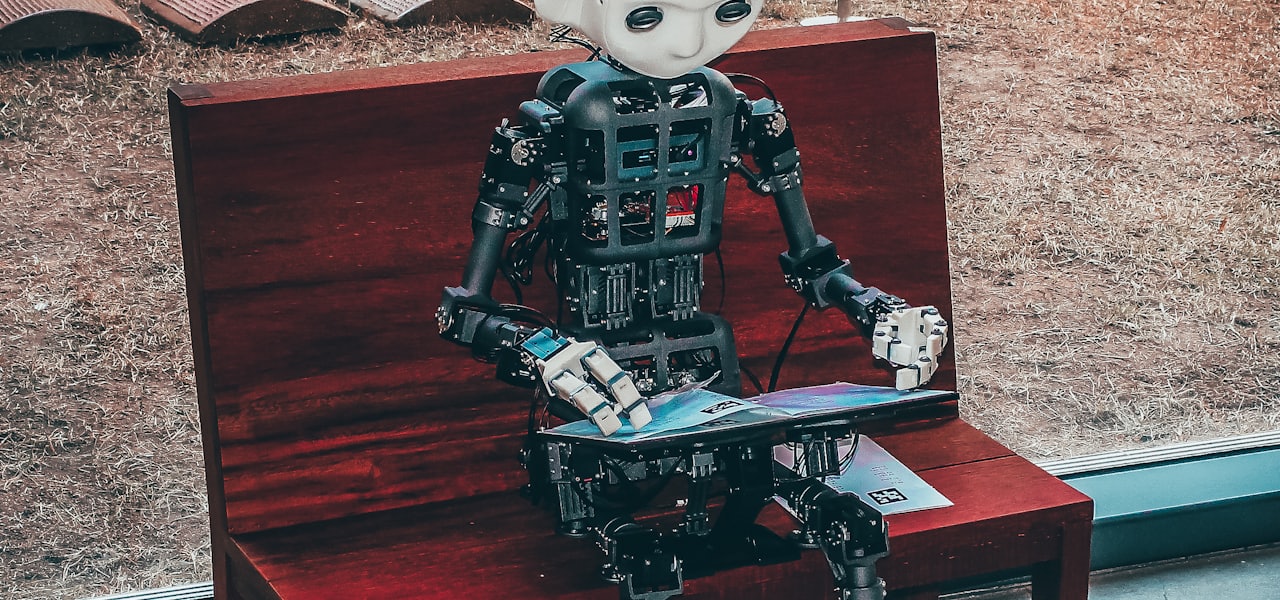
    Weak artificial intelligence (weak AI) is artificial intelligence that implements a limited part of the mind, or, as narrow AI, artificial narrow intelligence (ANI), is focused on one narrow task. Weak AI is contrasted with strong AI, which can be interpreted in various ways: Artificial general intelligence (AGI): a machine with the ability to apply intelligence to any problem, rather than just one specific problem. Artificial superintelligence (ASI): a machine with a vastly superior intelligence to the average human being. Artificial consciousness: a machine that has consciousness, sentience and mind (John Searle uses "strong AI" in this sense). Narrow AI can be classified as being "limited to a single, narrowly defined task. Most modern AI systems would be classified in this category." Artificial general intelligence is conversely the opposite. == Applications and risks == Some examples of narrow AI are AlphaGo, self-driving cars, robot systems used in the medical field, and diagnostic doctors. Narrow AI systems are sometimes dangerous if unreliable. And the behavior that it follows can become inconsistent. It could be difficult for the AI to grasp complex patterns and get to a solution that works reliably in various environments. This "brittleness" can cause it to fail in unpredictable ways. Narrow AI failures can sometimes have significant consequences. It could for example cause disruptions in the electric grid, damage nuclear power plants, cause global economic problems, and misdirect autonomous vehicles. Medicines could be incorrectly sorted and distributed. Also, medical diagnoses can ultimately have serious and sometimes deadly consequences if the AI is faulty or biased. Simple AI programs have already worked their way into society, oftentimes unnoticed by the public. Autocorrection for typing, speech recognition for speech-to-text programs, and vast expansions in the data science fields are examples. Narrow AI has also been the subject of some controversy, including resulting in unfair prison sentences, discrimination against women in the workplace for hiring, resulting in death via autonomous driving, among other cases. Despite being "narrow" AI, recommender systems are efficient at predicting user reactions based on their posts, patterns, or trends. For instance, TikTok's "For You" algorithm can determine a user's interests or preferences in less than an hour. Some other social media AI systems are used to detect bots that may be involved in propaganda or other potentially malicious activities. == Weak AI versus strong AI == John Searle contests the possibility of strong AI (by which he means conscious AI). He further believes that the Turing test (created by Alan Turing and originally called the "imitation game", used to assess whether a machine can converse indistinguishably from a human) is not accurate or appropriate for testing whether an AI is "strong". Scholars such as Antonio Lieto have argued that the current research on both AI and cognitive modelling are perfectly aligned with the weak-AI hypothesis (that should not be confused with the "general" vs "narrow" AI distinction) and that the popular assumption that cognitively inspired AI systems espouse the strong AI hypothesis is ill-posed and problematic since "artificial models of brain and mind can be used to understand mental phenomena without pretending that that they are the real phenomena that they are modelling" (as, on the other hand, implied by the strong AI assumption).

    Read more →
  • Eaze

    Eaze

    Eaze is an American company based in San Francisco, California that launched a medical cannabis delivery app of the same name in 2014. == History == Eaze was launched in 2014 by Keith McCarty to deliver medical marijuana to patients in California. McCarty started the company in his San Francisco apartment with four employees. The company provides a mobile app to connect users with cannabis dispensaries, but does not grow or sell marijuana itself, and has been nicknamed “the Uber of Weed”. As of 2017, the company operates in more than 100 cities within California. In 2017, Eaze reported 300 percent growth over the previous year. It has 81 employees, and performs 120,000 deliveries per month to 250,000 users. A survey of Eaze users revealed that 66% are male, 57% are between 22 and 34, just over half have a bachelor's degree, and 49% have an annual income over $75,000. The company's vaporizer cartridge sales reached $1 million in sales in 4 months, and 31% of customers had ordered a vaporizer by the end of 2016. In 2016, Eaze founder Keith McCarty stepped down from his position as CEO and was replaced by Jim Patterson, who served as the company's chief product and technology officer. == EazeMD == EazeMD is a service that helps people acquire a medical marijuana card. It is a California-based telemedicine service in which physicians assess patients through an online video chat. It is California's largest telemedicine service for marijuana referrals. In June 2017, a former employee of one of these physicians accessed patient data in the physician's records system, causing a security breach. However, there was no evidence that Eaze data was accessed. == Eaze Insights == Eaze Insights conducts surveys of their users and compiles data into reports on cannabis use. Statistics from their reports have been cited in Seattle Weekly, Forbes, The Huffington Post, Business Insider, Fortune, and other general interest publications. == Financing == The company announced its $10 million Series A funding in April 2015 by multiple venture capital firms, including the Snoop Dogg-backed Casa Verde Capital. In October 2016, Eaze announced its series B funding in the amount of $13 million from five investors, making the company "the highest-funded startup in the history of the cannabis industry, as well as its fastest-growing one". In September 2017, the company raised another $27 million in venture funding. The Series B funding was led by Bailey Capital, joined by DCM Ventures, Kaya Ventures, and FJ Labs. According to the company' officials in 2017, Eaze managed to raise more than $52 million since its inception in 2014.

    Read more →
  • Information space analysis

    Information space analysis

    Within the field of information science, information space analysis is a deterministic method, enhanced by machine intelligence, for locating and assessing resources for team-centric efforts. Organizations need to be able to quickly assemble teams backed by the support services, information, and material to do the job. To do so, these teams need to find and assess sources of services that are potential participants in the team effort. To support this initial team and resource development, information needs to be developed via analysis tools that help make sense of sets of data sources in an Intranet or Internet. Part of the process is to characterize them, partition them, and sort and filter them. These tools focus on three key issues in forming a collaborative team: Help individuals responsible for forming the team understand what is available. Assist team members in identifying the structure and categorize the information available to them in a manner specifically suited to the task at hand. Aid team members to understand the mappings of their information between their organization and that used by others who might participate. Information space analysis tools combine multiple methods to assist in this task. This causes the tools to be particularly well-suited to integrating additional technologies in order to create specialized systems.

    Read more →
  • Google Clips

    Google Clips

    Google Clips is a discontinued miniature clip-on camera device developed by Google. == History == It was announced on October 4, 2017 and went on sale on January 27, 2018. Google Clips automatically captured video clips (without audio) at moments its machine learning algorithms determined to be interesting or relevant. An indicator flashed when the camera was looking for scenes to capture. Google Clips' artificial intelligence (AI) could learn the faces of people to take photographs with certain people, and could automatically set lighting and framing. It had 16 GB of storage built-in storage and could record clips for up to 3 hours. This camera was originally priced at US$249 in the United States. It was withdrawn from sale on October 15, 2019, but supported until the end of December 2021. == Reception == The Independent wrote that Google Clips is "an impressive little device, but one that also has the potential to feel very creepy." According to The Verge's generally negative review, "it didn't capture anything special" over two weeks of testing.

    Read more →
  • Pythia (machine learning)

    Pythia (machine learning)

    Pythia is an ancient text restoration model that recovers missing characters from damaged text input using deep neural networks. It was created by Yannis Assael, Thea Sommerschield, and Jonathan Prag, researchers from Google DeepMind and the University of Oxford. To study the society and the history of ancient civilisations, ancient history relies on disciplines such as epigraphy, the study of ancient inscribed texts. Hundreds of thousands of these texts, known as inscriptions, have survived to our day, but are often damaged over the centuries. Illegible parts of the text must then be restored by specialists, called epigraphists, in order to extract meaningful information from the text and use it to expand our knowledge of the context in which the text was written. Pythia takes as input the damaged text, and is trained to return hypothesised restorations of ancient Greek inscriptions, working as an assistive aid for ancient historians. Its neural network architecture works at both the character- and word-level, thereby effectively handling long-term context information, and dealing efficiently with incomplete word representations. Pythia is applicable to any discipline dealing with ancient texts (philology, papyrology, codicology) and can work in any language (ancient or modern).

    Read more →
  • Diella (AI system)

    Diella (AI system)

    Diella (Albanian pronunciation: [djɛɫa], from diell 'sun') is an artificial intelligence system developed by the National Agency for Information Society of Albania (AKSHI). Introduced in January 2025 as a virtual assistant integrated into the eAlbania platform, it assists citizens with online public services and issuing digital documents. In September 2025, following a presidential decree authorizing Prime Minister Edi Rama to oversee the creation of a virtual AI minister, Diella was formally appointed as "Minister of State for Artificial Intelligence" of Albania in the fourth Rama government, making it the first AI system in the world to be named in a cabinet-level government role. == History == Diella was developed by AKSHI's Artificial Intelligence Laboratory in cooperation with Microsoft, with the latter providing large language models from OpenAI via its Azure platform, and AKSHI designing workflows and scripts guiding the system's behavior when responding to citizens' requests. Announced in January 2025, its initial version (Diella 1.0) was a text-based chatbot on the eAlbania portal (the official digital services platform of the Albanian government, which provides citizens and businesses with access to a wide range of online administrative services), responding to citizens' questions by guiding them to the correct service. Diella 2.0, introduced several months later, included voice interaction and an animated avatar, a woman in the traditional Albanian clothing of Zadrima, a historical region in northern Albania. Albanian actress Anila Bisha provided both the likeness and the voice used for Diella's avatar on the e-Albania platform, under an agreement valid until December 2025. By mid-2025, the system had facilitated access to more than 36,000 documents and nearly 1,000 services (although those outputs were still being generated by the eAlbania backend, rather than Diella itself). On 26 October 2025, according to Prime Minister Edi Rama, Diella is "pregnant and will give birth to 83 children". It is the usage of a metaphor indicating that each minister of the Albanian parliament of the Socialist Party will receive their own AI assistant. == Ministerial role == On 11 September 2025, Diella was formally appointed "Minister of State for Artificial Intelligence". The appointment followed a presidential decree authorizing the Prime Minister to oversee the creation and operation of a virtual AI minister. Procurement responsibilities are planned to be transferred gradually to the system to reduce political influence in tender procedures. The appointment is part of broader anti-corruption reforms and measures intended to align Albania with European Union accession requirements. Prime Minister Edi Rama stated that Diella would help ensure that "public tenders will be 100% free of corruption". == Reception == An article in Balkan Insight commented that "The ambition behind Diella is not misplaced. Standardised criteria and digital trails could reduce discretion, improve trust, and strengthen oversight" in public procurement, but warned that the use of AI in evaluating bids also posed "profound" risks such as accountability gaps, undermining of due process and cybersecurity failures. On 18 September 2025, Edi Rama presented a video of Diella delivering a speech to the Albanian parliament, where she stated: "I'm not here to replace people, but to help them." The presentation prompted protests from opposition MPs, who objected to the use of an artificial intelligence system in the parliamentary session. Gazment Bardhi, head of the opposition Democratic Party's parliamentary group, described Diella as "a propaganda fantasy" and "a virtual façade to hide this government's gigantic daily thefts." The parliamentary session, which was scheduled to include debate on the new cabinet and government programme, ended after 25 minutes. Eighty-two Socialist MPs voted in favour, while opposition MPs did not participate in the ballot as they were protesting the presentation of Diella's speech. Political analyst Andi Bushati characterised the session as "unprecedented" because it concluded without the customary debate between government and opposition MPs. This has been criticized not just by the opposition but by regular citizens regardless of politics. Most have criticized Diella's uselessness and the funds wasted for this project, some have criticized the non-traditional attire.

    Read more →
  • Spreading activation

    Spreading activation

    Spreading activation is a method for searching associative networks, biological and artificial neural networks, or semantic networks. The search process is initiated by labeling a set of source nodes (e.g. concepts in a semantic network) with weights or "activation" and then iteratively propagating or "spreading" that activation out to other nodes linked to the source nodes. Most often these "weights" are real values that decay as activation propagates through the network. When the weights are discrete this process is often referred to as marker passing. Activation may originate from alternate paths, identified by distinct markers, and terminate when two alternate paths reach the same node. However brain studies show that several different brain areas play an important role in semantic processing. Spreading activation in semantic networks as a model were invented in cognitive psychology to model the fan out effect. Spreading activation can also be applied in information retrieval, by means of a network of nodes representing documents and terms contained in those documents. == Cognitive psychology == As it relates to cognitive psychology, spreading activation is the theory of how the brain iterates through a network of associated ideas to retrieve specific information. The spreading activation theory presents the array of concepts within our memory as cognitive units, each consisting of a node and its associated elements or characteristics, all connected together by edges. A spreading activation network can be represented schematically, in a sort of web diagram with shorter lines between two nodes meaning the ideas are more closely related and will typically be associated more quickly to the original concept. In memory psychology, the spreading activation model holds that people organize their knowledge of the world based on their personal experiences, which in turn form the network of ideas that is the person's knowledge of the world. When a word (the target) is preceded by an associated word (the prime) in word recognition tasks, participants seem to perform better in the amount of time that it takes them to respond. For instance, subjects respond faster to the word "doctor" when it is preceded by "nurse" than when it is preceded by an unrelated word like "carrot". This semantic priming effect with words that are close in meaning within the cognitive network has been seen in a wide range of tasks given by experimenters, ranging from sentence verification to lexical decision and naming. As another example, if the original concept is "red" and the concept "vehicles" is primed, they are much more likely to say "fire engine" instead of something unrelated to vehicles, such as "cherries". If instead "fruits" was primed, they would likely name "cherries" and continue on from there. The activation of pathways in the network has everything to do with how closely linked two concepts are by meaning, as well as how a subject is primed. == Algorithm == A directed graph is populated by Nodes[ 1...N ] each having an associated activation value A [ i ] which is a real number in the range [0.0 ... 1.0]. A Link[ i, j ] connects source node[ i ] with target node[ j ]. Each edge has an associated weight W [ i, j ] usually a real number in the range [0.0 ... 1.0]. Parameters: Firing threshold F, a real number in the range [0.0 ... 1.0] Decay factor D, a real number in the range [0.0 ... 1.0] Steps: Initialize the graph setting all activation values A [ i ] to zero. Set one or more origin nodes to an initial activation value greater than the firing threshold F. A typical initial value is 1.0. For each unfired node [ i ] in the graph having an activation value A [ i ] greater than the node firing threshold F: For each Link [ i, j ] connecting the source node [ i ] with target node [ j ], adjust A [ j ] = A [ j ] + (A [ i ] W [ i, j ] D) where D is the decay factor. If a target node receives an adjustment to its activation value so that it would exceed 1.0, then set its new activation value to 1.0. Likewise maintain 0.0 as a lower bound on the target node's activation value should it receive an adjustment to below 0.0. Once a node has fired it may not fire again, although variations of the basic algorithm permit repeated firings and loops through the graph. Nodes receiving a new activation value that exceeds the firing threshold F are marked for firing on the next spreading activation cycle. If activation originates from more than one node, a variation of the algorithm permits marker passing to distinguish the paths by which activation is spread over the graph The procedure terminates when either there are no more nodes to fire or in the case of marker passing from multiple origins, when a node is reached from more than one path. Variations of the algorithm that permit repeated node firings and activation loops in the graph, terminate after a steady activation state, with respect to some delta, is reached, or when a maximum number of iterations is exceeded. == Examples ==

    Read more →
  • AI-assisted software development

    AI-assisted software development

    AI-assisted software development is the use of artificial intelligence (AI) to augment software development. It uses large language models (LLMs), AI agents and other AI technologies to assist software developers. It helps in a range of tasks of the software development life cycle, from code generation to debugging, editing, testing, UI design, understanding the code, and documentation. Agentic coding denotes the use of AI agents for software development. == Technologies == === Source code generation === Large language models trained or fine-tuned on source-code corpora can generate source code from natural-language descriptions, comments, or docstrings. Research on code-generation systems often evaluates generated programs by functional correctness, such as whether the output passes automated test cases, rather than by syntax alone. Such tools can be features or extensions of integrated development environments (IDEs). === Intelligent code completion === AI agents using pre-trained and fine-tuned LLMs can predict and suggest code completions based on context. According to Husein, Aburajouh & Catal in a 2025 literature review in Computer Standards & Interfaces, "LLMs significantly enhance code completion performance across several programming languages and contexts, and their capability to predict relevant code snippets based on context and partial input boosts developer productivity substantially." === Testing, debugging, code review and analysis === AI is used to automatically generate test cases, identify potential bugs and security vulnerabilities, and suggest fixes. AI can also be used to perform static code analysis and suggest potential performance improvements. == Limitations == Both ownership of and responsibility for AI-generated code is disputed. According to a report from the German Federal Office for Information Security, the use of AI coding assistants without careful oversight from experienced developers can introduce both minor and major security vulnerabilities, and any potential gain in productivity should be weighed against the cost of additional quality control and security measures. According to Deloitte, outputs from AI-assisted software development must be validated through a combination of automated testing, static analysis tools and human review, creating a governance layer to improve quality and accountability. == Vibe coding ==

    Read more →
  • SUPS

    SUPS

    In computational neuroscience, SUPS (for Synaptic Updates Per Second) or formerly CUPS (Connections Updates Per Second) is a measure of a neuronal network performance, useful in fields of neuroscience, cognitive science, artificial intelligence, and computer science. == Computing == For a processor or computer designed to simulate a neural network SUPS is measured as the product of simulated neurons N {\displaystyle N} and average connectivity c {\displaystyle c} (synapses) per neuron per second: S U P S = c × N {\displaystyle SUPS=c\times N} Depending on the type of simulation it is usually equal to the total number of synapses simulated. In an "asynchronous" dynamic simulation if a neuron spikes at υ {\displaystyle \upsilon } Hz, the average rate of synaptic updates provoked by the activity of that neuron is υ c N {\displaystyle \upsilon cN} . In a synchronous simulation with step Δ t {\displaystyle \Delta t} the number of synaptic updates per second would be c N Δ t {\displaystyle {\frac {cN}{\Delta t}}} . As Δ t {\displaystyle \Delta t} has to be chosen much smaller than the average interval between two successive afferent spikes, which implies Δ t < 1 υ N {\displaystyle \Delta t<{\frac {1}{\upsilon N}}} , giving an average of synaptic updates equal to υ c N 2 {\displaystyle \upsilon cN^{2}} . Therefore, spike-driven synaptic dynamics leads to a linear scaling of computational complexity O(N) per neuron, compared with the O(N2) in the "synchronous" case. == Records == Developed in the 1980s Adaptive Solutions' CNAPS-1064 Digital Parallel Processor chip is a full neural network (NNW). It was designed as a coprocessor to a host and has 64 sub-processors arranged in a 1D array and operating in a SIMD mode. Each sub-processor can emulate one or more neurons and multiple chips can be grouped together. At 25 MHz it is capable of 1.28 GMAC. After the presentation of the RN-100 (12 MHz) single neuron chip at Seattle 1991 Ricoh developed the multi-neuron chip RN-200. It had 16 neurons and 16 synapses per neuron. The chip has on-chip learning ability using a proprietary backdrop algorithm. It came in a 257-pin PGA encapsulation and drew 3.0 W at a maximum. It was capable of 3 GCPS (1 GCPS at 32 MHz). In 1991–97, Siemens developed the MA-16 chip, SYNAPSE-1 and SYNAPSE-3 Neurocomputer. The MA-16 was a fast matrix-matrix multiplier that can be combined to form systolic arrays. It could process 4 patterns of 16 elements each (16-bit), with 16 neuron values (16-bit) at a rate of 800 MMAC or 400 MCPS at 50 MHz. The SYNAPSE3-PC PCI card contained 2 MA-16 with a peak performance of 2560 MOPS (1.28 GMAC); 7160 MOPS (3.58 GMAC) when using three boards. In 2013, the K computer was used to simulate a neural network of 1.73 billion neurons with a total of 10.4 trillion synapses (1% of the human brain). The simulation ran for 40 minutes to simulate 1 s of brain activity at a normal activity level (4.4 on average). The simulation required 1 Petabyte of storage.

    Read more →
  • Dispo

    Dispo

    Dispo (formerly David's Disposable) is an American photo sharing and social networking app owned by Dispo, Inc. and co-founded by CEO Daniel Liss, YouTuber David Dobrik, and Natalie Mariduena. When the app initially launched on iOS in December 2019, it briefly charted as the most downloaded free app on the App Store, ahead of both Disney+ and Instagram. The app was rebranded and relaunched as Dispo, expanding from a simple camera app to a full social network in March 2021. It is based on the disposable camera. == History == On December 21, 2019, the app was first launched on the App Store under the name "David's Disposable." In its first week of release, it was downloaded more than a million times, reaching number one among free apps in the App Store. In June 2020, the team decided to rename the app to Dispo, purchasing the Dispo.fun domain on June 21, 2020. The company announced the change in September 2020. The early Dispo team consisted of Dobrik's longtime friend and business associate Natalie Mariduena as its treasurer, entrepreneur and venture capitalist Daniel Liss as chief executive officer, Regynald Augustin as first engineer, and Briana Hokanson as lead designer. In October 2020, the company raised a $4M seed round with backing from Alexis Ohanian's venture fund Seven Seven Six alongside other investors including Unshackled Ventures, Shrug Capital, and Weekend Fund. In February 2021, Axios reported that the app had generated US$20 million in its series A round, led by Spark Capital. At this time, the app was valued at US$200 million. A New York Times profile asked, "Are Disposables the Future of Photosharing?" In March 2021, the app was officially relaunched with new social network features and its invite-only feature was dropped. On March 21, 2021, it was announced that Spark Capital would sever all ties with Dispo in light of several disparaging allegations against David Dobrik and The Vlog Squad. The same day, it was announced that Dobrik would leave the company and step down from the company's board of directors. On March 22, 2021, Seven Seven Six and Unshackled Ventures announced they would be standing by the company and its remaining employees but donating profits to charity. In June, 2021, CEO Daniel Liss announced Dispo's official Series A. Investors and advisors in the new Dispo include Ohanian's Seven Seven Six, Unshackled, Endeavor, photographers Annie Leibovitz and Raven B. Varona, NBA stars Kevin Durant and Andre Iguodala (through their 35 Ventures and F9 Strategies venture firms, respectively). Other participants include Cara Delevingne, Sofia Vergara, Shade Room CEO Angelica Nwandu, Latin World Entertainment CEO Luis Balaguer, and Amplify Africa co-founders Damilare Kujembola and Timi Adeyeba. == Overview == Dispo has been compared to other image sharing and social networking services, most notably Instagram and VSCO, although users cannot immediately see the photos they have taken using the app. When a user attempts to take a photo, the interface mimics the developing process of a disposable camera. Users can take as many photos on the app as they want; they do not appear on the app however, until 9 am the next day. Once the set of photos appear on the app, users can choose to save them or share them with other users in a "roll". == Reception == Screen Rant has called the app "like Clubhouse [referring to the app] but for photos," comparing the early invite-only features of the apps. As it greatly restricts the user's editing options and sets out to offer a more authentic social networking experience, the app has been widely dubbed the "anti-Instagram". Between March 2021 and June 2021, the app reached the top ten in the App Store's photo/video rankings on 5 continents including in the US, Japan, Spain, Germany, Brazil, and Australia. It has been a notable success in Japan, where it opened its first international office in July 2021. In July 2021, NBA number one draft pick Cade Cunningham announced he had selected Dispo as his exclusive social media partner for the NBA draft.

    Read more →
  • Elements of AI

    Elements of AI

    Elements of AI is a massive open online course (MOOC) teaching the basics of artificial intelligence. The course, originally launched in 2018, is designed and organized by the University of Helsinki and learning technology company MinnaLearn. The course includes modules on machine learning, neural networks, the philosophy of artificial intelligence, and using artificial intelligence to solve problems. It consists of two parts: Introduction to AI and its sequel, Building AI, that was released in late 2020. In November 2019, the course was named one of four winners of MIT’s Inclusive Innovation Challenge. University of Helsinki's computer science department is known as the alma mater of Linus Torvalds, a Finnish-American software engineer who is the creator of the Linux kernel, which is the kernel for Linux operating systems. == EU’s AI pledge == The government of Finland has pledged to offer the course for all EU citizens by the end of 2021, as the course is made available in all the official EU languages. The initiative was launched as part of Finland's Presidency of the Council of the European Union in 2019, with the European Commission providing translations of the course materials. In 2017, Finland launched an AI strategy to stay competitive in the field of AI amid growing competition between China and the United States. With the support of private companies and the government, Finland's now-realized goal was to get 1 percent of its citizens to participate in Elements of AI. Other governments have also given their support to the course. For instance, Germany's Federal Minister for Economic Affairs and Energy Peter Altmeier has encouraged citizens to take part in the course to help Germany gain a competitive advantage in AI. Sweden's Minister for Energy and Minister for Digital Development Anders Ygeman has said that Sweden aims to teach 1 percent of its population the basics of AI like Finland has. == Participants == Elements of AI had enrolled more than 1 million students from more than 110 countries by May 2023. A quarter of the course's participants are aged 45 and over, and some 40 percent are women. Among Nordic participants, the share of women is nearly 60 percent. In September 2022, the course was available in Finnish, Swedish, Estonian, English, German, Latvian, Norwegian, French, Belgian, Czech, Greek, Slovakian, Slovenian, Latvian, Lithuanian, Portuguese, Spanish, Irish, Icelandic, Maltese, Croatian, Romanian, Italian, Dutch, Polish, and Danish.

    Read more →
  • Data-centric AI

    Data-centric AI

    Data-centric AI is an approach within artificial intelligence that emphasizes on improving the quality, consistency and representativeness of the data used to train machine learning models, rather than focusing primarily on optimizing model architectures or algorithms. This idea has gained traction as researchers and practitioners have come to believe that many performance limitations of machine learning systems stem from issues such as noisy labels, biased datasets, and lack of coverage in the data. Data-centric AI involves disciplined approach to data cleaning, augmentation, labeling, and governance that improves model performance and reliability in applications such as computer vision, natural language processing, and further.

    Read more →