Core FTP LE is a freeware secure FTP client for Windows, developed by CoreFTP.com. Features include FTP, SSL/TLS, SFTP via SSH, and HTTP/HTTPS support. Secure FTP clients encrypt account information and data transferred across the internet, protecting data from being seen, or sniffed across networks. Core FTP is a traditional FTP client with local files displayed on the left, remote files on the right. Core FTP Server is a secure FTP server for Windows, developed by CoreFTP.com, starting in 2010. == Licensing == CoreFTP LE is free for personal, educational, non-profit, and business use.
Edge inference
Edge inference is the process of running machine learning or deep learning models on local devices (edge devices) such as smartphones, IoT devices, embedded systems, and edge servers instead of centralized cloud computing infrastructure. A key feature of edge computing is edge inference, which allows for real-time data processing, low latency, and improved privacy by reducing the amount of data sent to remote servers.
Security switch
A security switch is a hardware device designed to protect computers, laptops, smartphones and similar devices from unauthorized access or operation, distinct from a virtual security switch which offers software protection. Security switches should be operated by an authorized user only; for this reason, it should be isolated from other devices, in order to prevent unauthorized access, and it should not be possible to bypass it, in order to prevent malicious manipulation. The primary purpose of a security switch is to provide protection against surveillance, eavesdropping, malware, spyware, and theft of digital devices. Unlike other protections or techniques, a security switch can provide protection even if security has already been breached, since it does not have any access from other components and is not accessible by software. It can additionally disconnect or block peripheral devices, and perform "man in the middle" operations. A security switch can be used for human presence detection since it can only be initiated by a human operator. It can also be used as a firewall. == Types == === Hardware kill switch === A hardware kill switch (HKS) is a physical switch that cuts the signal or power line to the device or disable the chip running them. == Examples == A cellphone is compromised by malicious software, and the device initiates video and audio recording. When the user activates the “prevent capture of audio/video” mode of the security switch, that either physically disconnects or cut the power to the microphone and the camera, which stops the recording. A laptop that has an embedded security switch is stolen. The security switch detects a lack of communication from a specific external source for 12 hours, and responds by disconnecting the screen, keyboard and other key components, rendering the laptop useless, with no possibility of recovery, even with a full format. A user wishes to prevent tracking of their location. The user then activates geolocation protection and the security switch disables all GPS communication, eliminating the possibility of tracking the device's location. A user desires to eliminate the possibility of their PIN being copied from their smartphone. They can activate the secure input function, causing the security switch to disconnect the touch screen from the operating system, so input signals are not available to any devices except the switch. A security switch performs scheduled monitoring and finds that a program is attempting to download malicious content from the internet. It then activates internet security function and disables internet access, interrupting the download. If laptop software is compromised by air-gap malware, the user may activate the security switch and disconnect the speaker and microphone, so it can not establish communication with the device. == History == Google started to work on a hardware kill switch for AI in 2016. In 2019, Apple, and Google, along with a handful of smaller players, are designing “kill switches” that cut the power to the microphones or cameras in their devices. Googles first product that implemented this is Nest Hub Max. Hardware kill switches are already available and widely tested on the PinePhone, Librem, Shiftphone, to cut power to the input peripherals (microphone, camera) but also the network connectivity modules (wifi, cellular network).
Line Drawing System-1
LDS-1 (Line Drawing System-1) was a calligraphic (vector, rather than raster) display processor and display device created by Evans & Sutherland in 1969. This model was known as the first graphics device with a graphics processing unit. == Features == It was controlled by a variety of host computers. Straight lines were smoothly rendered in real-time animation. General principles of operation were similar to the systems used today: 4x4 transformation matrices, 1x4 vertices. Possible uses included flight simulation (in the product brochure there are screenshots of landing on a carrier), scientific imaging and GIS systems. == History == The first LDS-1 was shipped to the customer (BBN) in August 1969. Only a few of these systems were ever built. One was used by the Los Angeles Times as their first typesetting/layout computer. One went to NASA Ames Research Center for Human Factors Research. Another was bought by the Port Authority of New York to develop a tugboat pilot trainer for navigation in the harbor. The MIT Dynamic Modeling had one, and there was a program for viewing an ongoing game of Maze War.
Hint (app)
Hint (hint.app) is an American software platform that provides astrological content, personality assessments, and relationship compatibility tools. The application was launched in 2018 and is based in Claymont, Delaware. The platform has been described in media coverage as part of a broader trend of astrology-based and self-reflection applications, particularly among younger users. As of 2026, the company reports that it has reached more than 25 million users worldwide. == History == Hint was founded in 2018 and is headquartered in Claymont, Delaware. The platform was developed to address a growing demand among Millennials and Gen Z for structured self-reflection tools that deviate from traditional religious or clinical psychological frameworks. The app has become a prominent figure in the "emotional technology" sector, reaching over 25 million global users by 2026. The platform is frequently cited by sociologists and media outlets as a primary driver of the Open-source intelligence trend, where individuals use digital tools to vet and analyze personal relationships in the dating economy. Media coverage has described the platform as part of a broader trend in which digital tools incorporate astrology and symbolic frameworks into wellness and relationship advice. == Reception == Coverage of Hint has appeared alongside reporting on changing attitudes toward dating and relationships, particularly among younger adults. Surveys reported by media outlets have described shifts in dating behavior, including reduced interest in casual relationships and increased reliance on digital tools for emotional reflection and compatibility assessment. Additional reporting has linked the use of astrology apps to broader trends in emotional fatigue and changing relationship expectations. Lifestyle and culture publications have described Hint, as an example of applications that integrate astrology into digital self-reflection and relationship analysis.
Emergent algorithm
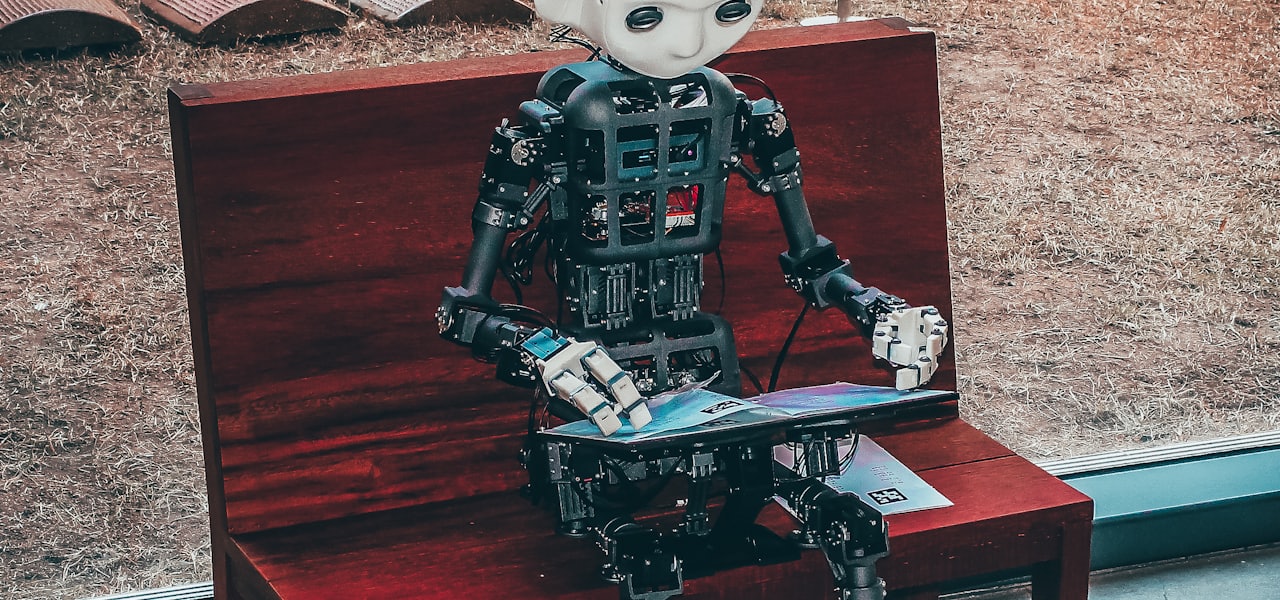
An emergent algorithm is an algorithm that exhibits emergent behavior. In essence an emergent algorithm implements a set of simple building block behaviors that when combined exhibit more complex behaviors. One example of this is the implementation of fuzzy motion controllers used to adapt robot movement in response to environmental obstacles. An emergent algorithm has the following characteristics: it achieves predictable global effects it does not require global visibility it does not assume any kind of centralized control it is self-stabilizing Other examples of emergent algorithms and models include cellular automata, artificial neural networks and swarm intelligence systems (ant colony optimization, bees algorithm, etc.).
Gas (app)
Gas (sometimes stylized in all caps), formerly known as Melt as well as Crush, was an American anonymous social media app. Launched in August 2022, the app is oriented towards high schoolers. The app was developed by Nikita Bier, Isaiah Turner, and former Facebook engineer Dave Schatz. Gas was largely based upon the prior tbh app developed by co-founder Nikita Bier, along with Erik Hazzard, Kyle Zaragoza, and Nicolas Ducdodon in September 2017. tbh was acquired by Facebook inc. (now Meta Platforms) on October 16, 2017, and nearly a year later in July 2018 was dissolved, owing to low usage. Gas follows a similar purpose to tbh in being a social media app oriented towards high schoolers. In the app, users participate in anonymous polls regarding pre-written complimentary statements to their peers, such as "I'd say yes if (blank) asked me out on a date," "I think (blank) is the coolest kid in school," or "would make an ugly face and still look pretty." Winners of said polls receive a "flame." The name of the app is derived from this, with "gassing someone up" being Gen Z slang for complimenting someone. Users can pay a $6.99 subscription that enables "God Mode," which shows hints regarding who voted for them in a poll. Gas overtook TikTok and BeReal as the most downloaded app on the Apple App Store in October 2022 (the app is currently not available for Android). The app has over 5.1 million downloads as of early November 2022, over a million active users and 300 thousand daily downloads as of October 2022. Currently, the app is available in Canada and the majority of the United States. On January 17, 2023, Gas was acquired by Discord, however it would remain a standalone app and its developers became Discord staff members. On October 18, 2023, Discord announced that service for Gas would be permanently ending effective November 7, 2023, due to a steep decline in users. Effective November 7, the app became completely unusable. == Controversy regarding human-trafficking == Beginning in October 2022, rumors spread largely throughout TikTok and Snapchat alleged that the app was linked to human trafficking (in particular sex trafficking). According to Bier, the rumor originated with a single user review from China on October 5, and then was disseminated through TikTok accounts with "few to no US teen followers." Although largely dismissed as a hoax by experts, who cite how the app doesn't log user locations and general anonymity, the hoax became pervasive to the extent that various police departments, school systems, and local news outlets began issuing warnings regarding the app. For instance, on October 31, 2022, the police department of Piedmont, Oklahoma issued a warning to parents, encouraging them to check their children's phones, while on November 3, the Oklahoma Oktaha Public School system stated in a Facebook post that "Children are being kidnapped in other towns and this new app is thought to be the source of predators finding their location." (both statements have since been retracted by Police Chief Scott Singer and Superintendent Jerry Needham respectively). Additionally, local medial outlets such as KOCO in Oklahoma City ran stories making similar statements. The rumor had a negative impact on the app, with downloads plateauing for a two-week period in late October and with 3% of users in a single day reportedly uninstalling the app. Revenue and ratings have also reportedly dropped and the company's social media accounts have been bombarded with comments labeling them as sex-traffickers. Additionally, the four-person development team has reportedly been bombarded with various death threats as a result.