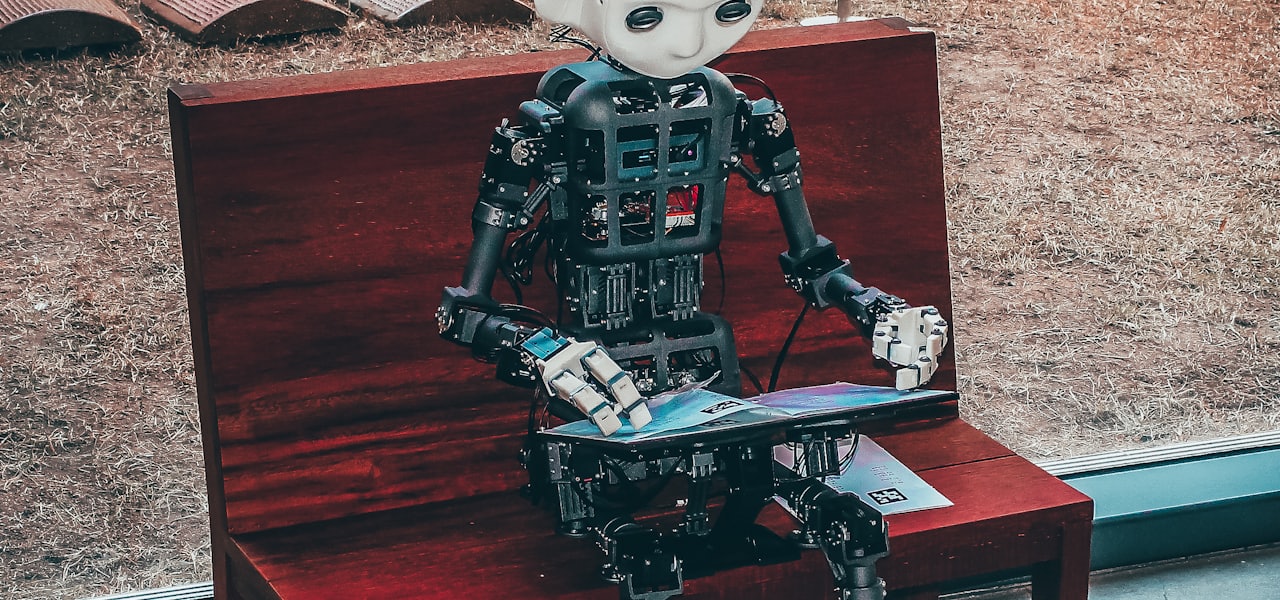
Operation Serenata de Amor is an artificial intelligence project designed to analyze public spending in Brazil. The project has been funded by a recurrent financing campaign since September 7, 2016, and came in the wake of major scandals of misappropriation of public funds in Brazil, such as the Mensalão scandal and what was revealed in the Operation Car Wash investigations. The analysis began with data from the National Congress then expanded to other types of budget and instances of government, such as the Federal Senate. The project is built through collaboration on GitHub and using a public group with more than 600 participants on Telegram. The name "Serenata de Amor," which means "serenade of love," was taken from a popular cashew cream bonbon produced by Chocolates Garoto in Brazil. == Modules == Throughout development of the project, new modules have been newly introduced in addition to the main repository: The main repository, serenata-de-amor, serves as the starting point for investigative work. Rosie is the robot programmed to identify public funds expenses with discrepancies, starting with CEAP (Quota for Exercise of Parliamentary Activity); it analyzes each of the reimbursements requested by the deputies and senators, indicating the reasons that lead it to believe they are suspicious. From Rosie was born whistleblower, which tweets under the name of @RosieDaSerenata, distributing the results found on social media. Jarbas (Github repository) is a data visualization tool which shows a complete list of reimbursements made available by the Chamber of Deputies and mined by Rosie. Toolbox is a Python installable package that supports the development of Serenata de Amor and Rosie. == History == Operation Serenata de Amor is an Artificial intelligence project for analysis of public expenditures. It was conceived in March 2016 by data scientist Irio Musskopf, sociologist Eduardo Cuducos and entrepreneur Felipe Cabral. The project was financed collectively in the Catarse platform, where it reached 131% of the collection goal paying 3 months of project development. Ana Schwendler, also a data scientist, Pedro Vilanova "Tonny", data journalist, Bruno Pazzim, software engineer, Filipe Linhares, a frontend engineer, Leandro Devegili, an entrepreneur and André Pinho took the first steps towards constructing the platform, such as collecting and structuring the first datasets. Jessica Temporal, data scientist and Yasodara Córdova "Yaso", researcher, Tatiana Balachova "Russa", UX designer, joined the project after the financing took place. The members created a recurring financing campaign, expanding the analysis of public spending to the Federal Senate. Donors make monthly payments ranging from 5 BRL to 200 BRL to maintain group activities. The monthly amount collected is around 10,000 BRL. == Results == In January 2017, concluding the period financed by the initial campaign, the group carried out an investigation into the suspicious activities found by the data analysis system. 629 complaints were made to the Ombudsman's Office of the Chamber of Deputies, questioning expenses of 216 federal deputies. In addition, the Facebook project page has more than 25,000 followers, and users frequently cite the operation as a benchmark in transparency in the Brazilian government. One of the examples of results obtained by the operation is the case of the Deputy who had to return about 700 BRL to the House after his expenses were analyzed by the platform. The platform was able to analyze more than 3 million notes, raising about 8,000 suspected cases in public spending. The community that supports the work of the team benefits from open source repositories, with licenses open for the collaboration. So much so that the two main data scientists of the project presented it at the CivicTechFest in Taipei, obtaining several mentions even in the international press. The technical leader presented the project in Poland during DevConf2017 in Kraków. It was also presented in the Google News Lab in 2017. It was presented by Yaso, when she was the Director of the initiative, at the MIT Media Lab/Berkman Klein Center Initiative for Artificial Intelligence ethics, and at the Artificial Intelligence and Inclusion Symposium, an initiative of the Global Network of Internet & Society Centers (NoC). It was also presented both by Irio and Yaso at the Digital Harvard Kennedy School, over a lunch seminar, where the transparency of the platform and the main solutions found were discussed, so that the code and data are always available to verify its suitability. This infographic provides information about the first results of Operation Serenata de Amor, a project that analyzes open data on public spending to find discrepancies. The project was presented by Yaso to the House Audit and Control Committee of the Chamber of Deputies in August 2017, and raised the interest of House officials who work with open data. The operation has been a source of inspiration for other civic projects that aim to work with similar goals, demonstrating the broader impact of artificial intelligence also in industry in Brazil. Participation of several team members in events throughout Brazil and abroad can be found on the Internet, such as presentation at OpenDataDay, held at Calango Hackerspace in the Federal District, Campus Party Bahia, Campus Party Brasilia, Friends of Tomorrow, XIII National Meeting of Internal Control, in the event USP Talks Hackfest against corruption in João Pessoa, the latter being also highlighted in the National Press.
IMazing
iMazing is mobile device management software that allows users to transfer files and data between iOS devices (iPhone, iPad and iPod Touch) and macOS or Windows computers, in addition to many other features beyond the scope of what Apple's own tools enable. == History == Developed by DigiDNA, iMazing was initially released in 2008 as DiskAid, enabling users to transfer data and files from the iPhone or iPod Touch to Mac or Windows computers. DiskAid was renamed iMazing in 2014. Version 2.0 was released on September 13, 2016. In August 2021, version 2.14 of iMazing added a spyware detection feature. The feature is based on Amnesty International’s Mobile Verification Toolkit to detect Pegasus Spyware following the publication of Pegasus Project. == Description == With iMazing, an iPhone or iPad can be used similarly to an external hard drive. It performs tasks that iTunes doesn’t offer, including incremental backups of iOS devices, browsing and exporting text and voicemail messages, managing apps, encryption, and migrating data from an old phone to a new one. The menu bar app iMazing Mini enables automatic, wireless and encrypted backups of iPhones. The iMazing HEIC Converter is a free desktop app for Mac and PC that lets users convert photos from HEIC format to JPG or PNG.
Artificial intelligence industry in Canada
The artificial intelligence industry in Canada is a rapidly expanding sector. Although Canada held a pioneering role in the early development of artificial intelligence, transforming research excellence into broad commercial adoption has proven challenging. Despite globally recognized scientific achievements and a deep pool of skilled experts, by June 2024, Canada recorded the lowest rate of AI integration among OECD countries, with only 12% of firms implementing AI in their products or services. However, AI adoption has shown significant momentum—doubling from mid-2024 to mid-2025, rising from 6.1% to 12.2%. As of September 2025, Statistics Canada indicated that while about one-third of Canadian businesses had no plans to adopt artificial intelligence in the next year, 14.5% reported intentions to begin using AI for producing goods or delivering services. The primary reasons for not moving forward with AI were lack of relevance, insufficient knowledge, and privacy concerns. According to Public Works Canada (PwC), the pace of AI adoption in Canada is roughly three-quarters of the United States rate, highlighting a notable gap between the two countries in business integration of this technology. British-Canadian computer scientist Geoffrey Hinton stated in 2025 that Canadian companies are adopting artificial intelligence at a slower pace, which may result in the loss of the country's early advantages in the field. At the "All In AI" conference held in Montreal in September 2025, the Minister of Artificial Intelligence and Digital Innovation Evan Solomon, described "Building digital sovereignty" as the most pressing democratic issue of the time. He introduced a 26-person task force focused on updating Canada's AI strategy. In their 2024 report " "Learning Together for Responsible Artificial Intelligence" report, the Innovation, Science, and Economic Development Canada stressed that public awareness, trust, and AI literacy are essential for the responsible adoption and governance of AI in Canada. Montreal workshops in 2021 expanded the OECD's 2019 definition of AI as "the set of computer techniques that enable a machine (e.g., a computer or telephone) to perform tasks that typically require intelligence, such as reasoning or learning. It is also referred to as the automation of intelligent tasks. Scientific developments in AI, such as deep-learning techniques, have made it possible to design access to huge amounts of data and ever-increasing computing power. These new techniques have been rapidly deployed on a large scale in all areas of social life, in transport, education, culture and health." == Federal investments and policy == The 2025 federal budget allocates over $1 billion over the next five years to bolster Canada's artificial intelligence and quantum computing ecosystem. == Industry landscape or research hubs == AlexNet, an influential deep convolutional neural network developed at the University of Toronto by Alex Krizhevsky, Ilya Sutskever, and Geoffrey Hinton, marked a pivotal turning point in modern artificial intelligence. In 2012, it achieved a dramatic reduction in error rates for the ImageNet Large Scale Visual Recognition Challenge (ILSVRC), showcasing the practical power of deep learning and GPU acceleration. The success of AlexNet helped cement Canada’s reputation for AI leadership and inspired rapid adoption of deep learning across the technology sector, with ongoing impact in both academic and commercial domains. In healthcare, AlexNet has been adapted for medical imaging to assist with analyzing radiographs, mammograms, and other scans, including identifying abnormalities and supporting clinical diagnosis. In 2015, the Ottawa-based start-up Advanced Symbolics Inc. (ASI) began developing Polly, an artificial intelligence system designed to analyze and anticipate how target audiences behave—enabling more effective communication strategies and advertising campaigns. Polly was named after its first assignment analyzing the politics of Brexit. The AI gained widespread attention in 2016 for accurately forecasting both the Brexit referendum and the 2016 U.S. presidential election won by Donald Trump. The company states that Polly is used by organizations in diverse sectors—including healthcare, politics, entertainment, and mental health research—to support decision-making based on predictive analytics. Chartwatch, an AI tool developed in Canada, has been shown to reduce unexpected hospital deaths by 26% according to a 2024 study. The system analyzes patient data to detect subtle signs of deterioration, supporting healthcare teams in providing timely interventions. === Notable figures in AI in Canada === Geoffrey Hinton's decades-long work eventually formed the foundation of artificial intelligence, which earned him the Nobel Prize for physics in 2024. Yoshua Bengio, who won the Turing Award in 2018 for his pioneering work in deep learning, founded what would become Mila in 1993. Mila, is currently a collaboration between four Montreal-based academic partners.—the Pan-Canadian Artificial Intelligence Strategy includes Alberta's Amii, Toronto's Vector Institute, and Mila. Fakhreddine Karray's work on operational AI has had tangible impact across several Canadian-relevant sectors, notably intelligent transportation systems, virtual healthcare, and driver safety. === AI in the oil and gas industry === According to a 2020 Ernst & Young report the oil and gas industry in Canada is using AI in automating routine, repetitive, and dangerous tasks with technologies like robotic process automation and machine learning; optimizing production and processing; enhancing transportation logistics; improving equipment operation and monitoring; and enabling preventative maintenance. AI is also deployed for data analysis to improve prediction and decision-making, and is expected to automate up to 50% of job competencies in upstream oil and gas by 2040. Oilsands giant Suncor Energy operates a large fleet of autonomous trucks and has started using AI in its dispatch system at the Mildred Lake mine. As of 2024, AI manages routine tasks such as allocating trucks to dump stations and sending them to refuelling locations. === Indigenous and Inuit Innovation in AI === Indigenous organizations have been working on the creation of new technologies for language revitalization in partnership with National Research Council of Canada since the mid-2010s. In 2025, Inuit researchers and technology partners launched an AI-powered initiative to support the revitalization and preservation of Inuktitut, demonstrating how artificial intelligence can be adapted for Indigenous language and cultural priorities. A 2025 CBC article notes that, while AI can help revitalize Inuktitut, Inuit leaders emphasize concerns about data sovereignty, information ownership, and the need for Indigenous leadership to ensure transparency, privacy, and accountability in AI development. == Regulation == Canada's Artificial Intelligence and Data Act (AIDA) was proposed in November 2022, as part of the Digital Charter Implementation Act (Bill C-27). As well voluntary codes, such as the September 2023 Code of Conduct for Generative AI, and landmark investments in advanced computing infrastructure and the Canadian Artificial Intelligence Safety Institute (CAISI) reflect Canada's commitment to both safety and global competitiveness. == AI infrastructure == Canada has undertaken efforts to expand its AI computing infrastructure at both provincial and federal levels. The federal government's Canadian Sovereign AI Compute Strategy, allocated up to C$2 billion in Budget 2024, aims to enhance computing capacity to support domestic AI industry growth and AI adoption across the economy, with up to C$700 million designated to mobilize private sector investment in new or expanded data centres. Alberta has introduced an AI Data Centres Strategy to position itself as a leading North American destination for data centre investment, targeting C$100 billion worth of AI data centres under development by 2030. One major project under Alberta's strategy is the Wonder Valley AI Data Centre Park near Grande Prairie, which was exempted from provincial environmental impact assessment in April 2026 but still requires permits demonstrating safe construction and operation. According to Statista, as of April 2026, Canada has 287 data centres.
Bisection (software engineering)
Bisection is a method used in software development to identify change sets that result in a specific behavior change. It is mostly employed for finding the patch that introduced a bug. Another application area is finding the patch that indirectly fixed a bug. == Overview == The process of locating the changeset that introduced a specific regression was described as "source change isolation" in 1997 by Brian Ness and Viet Ngo of Cray Research. Regression testing was performed on Cray's compilers in editions comprising one or more changesets. Editions with known regressions could not be validated until developers addressed the problem. Source change isolation narrowed the cause to a single changeset that could then be excluded from editions, unblocking them with respect to this problem, while the author of the change worked on a fix. Ness and Ngo outlined linear search and binary search methods of performing this isolation. Code bisection has the goal of minimizing the effort to find a specific change set. It employs a divide and conquer algorithm that depends on having access to the code history which is usually preserved by revision control in a code repository. == Bisection method == === Code bisection algorithm === Code history has the structure of a directed acyclic graph which can be topologically sorted. This makes it possible to use a divide and conquer search algorithm which: splits up the search space of candidate revisions tests for the behavior in question reduces the search space depending on the test result re-iterates the steps above until a range with at most one bisectable patch candidate remains === Algorithmic complexity === Bisection is in LSPACE having an algorithmic complexity of O ( log N ) {\displaystyle O(\log N)} with N {\displaystyle N} denoting the number of revisions in the search space, and is similar to a binary search. === Desirable repository properties === For code bisection it is desirable that each revision in the search space can be built and tested independently. === Monotonicity === For the bisection algorithm to identify a single changeset which caused the behavior being tested to change, the behavior must change monotonically across the search space. For a Boolean function such as a pass/fail test, this means that it only changes once across all changesets between the start and end of the search space. If there are multiple changesets across the search space where the behavior being tested changes between false and true, then the bisection algorithm will find one of them, but it will not necessarily be the root cause of the change in behavior between the start and the end of the search space. The root cause could be a different changeset, or a combination of two or more changesets across the search space. To help deal with this problem, automated tools allow specific changesets to be ignored during a bisection search. == Automation support == Although the bisection method can be completed manually, one of its main advantages is that it can be easily automated. It can thus fit into existing test automation processes: failures in exhaustive automated regression tests can trigger automated bisection to localize faults. Ness and Ngo focused on its potential in Cray's continuous delivery-style environment in which the automatically isolated bad changeset could be automatically excluded from builds. The revision control systems Fossil, Git and Mercurial have built-in functionality for code bisection. The user can start a bisection session with a specified range of revisions from which the revision control system proposes a revision to test, the user tells the system whether the revision tested as "good" or "bad", and the process repeats until the specific "bad" revision has been identified. Other revision control systems, such as Bazaar or Subversion, support bisection through plugins or external scripts. Phoronix Test Suite can do bisection automatically to find performance regressions.
Golden record (informatics)
In informatics, a golden record is the valid version of a data element (record) in a single source of truth system. It may refer to a database, specific table or data field, or any unit of information used. A golden copy is a consolidated data set, and is supposed to provide a single source of truth and a "well-defined version of all the data entities in an organizational ecosystem". Other names sometimes used include master source or master version. The term has been used in conjunction with data quality, master data management, and similar topics. (Different technical solutions exist, see master data management). == Master data == In master data management (MDM), the golden copy refers to the master data (master version) of the reference data which works as an authoritative source for the "truth" for all applications in a given IT landscape.
Ibotta
Ibotta, Inc. is an American mobile technology company headquartered in Denver, Colorado. Founded in 2011, the company offers cash back rewards on various purchases through its Ibotta Performance Network and direct to consumer app. Ibotta partners with CPG (consumer packaged goods) brands and network publishers to provide these rewards. As of 2024, the company operates solely in the United States. The company's rewards-as-a-service offering, the Ibotta Performance Network, went live in 2022. In August 2019, Ibotta received a $1 billion valuation after its Series D funding, and in 2023, the company surpassed $1.5 billion cash rewards paid to over 50 million consumers since the company's founding. Ibotta became a publicly traded company in April 2024 with a listing on the New York Stock Exchange. As of September 2025, Ibotta is trading at approximately $27.13 per share, marking a 69% decline from its initial public offering price of $88 per share on April 18, 2024. == History == === Founding through early 2019 === Ibotta was founded by current CEO Bryan Leach. The company was incorporated in 2011 and the app launched to both the App Store and Google Play stores in 2012. Early investors included entrepreneur and computer scientist Jim Clark and Tom “TJ” Jermoluk, Chairman of @Home Network. In 2015, Ibotta expanded beyond item level grocery, adding the ability to get cash back on in-store retail purchases. In 2016, in-app mobile commerce began, allowing users to navigate from the Ibotta app to its partners' apps to earn cash back on purchases. In 2016 with a Series C investment, Ibotta had raised over $73 million in funding. In March of that year, Ibotta partnered with Anheuser-Busch to offer cash back for adults who purchased its products. In May, the company partnered with LiveRamp so that companies could use their CRM data to create segmented, personalized campaigns. At the time, the company had around 200 full- and part-time employees and moved from offices in Lower Downtown Denver (LoDo) to a 40,000-square-foot office in the central Denver business district. A year later, the company had to expand to a second floor as it added almost another 100 employees. In 2017, Ibotta added cash back for Uber to its app as well as cash back rewards for online and mobile purchases. In 2018, Ibotta was listed on the Inc. 5,000 list as one of the fastest growing private companies in the U.S. A year later, in January 2019, the Ibotta app had been downloaded more than 30 million times with users receiving a reported $500 million in cash back rewards. That year, Ibotta was the largest mobile company in Colorado with six million monthly active users. === August 2019 to present === In August 2019, Ibotta was valued at $1 billion, following a Series D round of funding. The round was led by Koch Disruptive Technologies, a subsidiary of Koch Industries. 2019 was also the year the company introduced Pay with Ibotta, which allowed users to complete purchases at key retailers on the Ibotta app and earn instant cash back in the process. With that new service, users were able to enter their purchase total and use a QR code to checkout and receive immediate cash back. In 2020, the company partnered with Trees for the Future to plant up to 1 million trees as part of an Earth Month campaign to raise awareness about the waste of unused paper coupons. In response to the COVID-19 pandemic, Ibotta partnered with CPG brands in their “Here to Help” campaign and together committed over $10 million in cash back to American consumers. The company added the ability to earn cash back from online grocery pick-up and delivery orders. Later that year, Ibotta started its free Thanksgiving program, providing users with 100% cash back on select groceries needed for a Thanksgiving meal. By 2022, the company had provided approximately 10 million Thanksgiving meals. In 2021, Ibotta acquired the company OctoShop (originally InStok), a shopping browser extension company. The OctoShop app enables users to compare prices across stores and set restock and price-drop alerts. In April 2022, the Ibotta Performance Network (IPN) was launched. The IPN allows brands to deliver digital offers to consumers through third party publishers. Retailers including Walmart, Dollar General and Family Dollar, food delivery services including Instacart, and convenience stores including Shell are all part of the Ibotta Performance Network. This pay-per-sales or success-based performance network reaches over 200 million consumers. On April 18, 2024, Ibotta had its initial public offering (IPO), trading on the New York Stock Exchange (NYSE) under the ticker symbol IBTA. It was the largest technology IPO in Colorado history. In October 2025, Ibotta announced a partnership with technology and analytics company Circana, integrating Circana's Household Lift measurement into Ibotta campaigns to give CPG brands an increased understanding of the impact of their promotional campaigns. On November 3, 2025, Ibotta launched LiveLift, a tool for companies to measure the return on investment of digital promotions, in order to optimize performance marketing goals. === Athletic partnerships === Ibotta became the official jersey patch partner of the New Orleans Pelicans, a professional men's basketball team in the National Basketball Association (NBA), for the 2020–2021 and 2023–2024 seasons. Ibotta became the official jersey patch partner of the 2023 NBA champion Denver Nuggets baskeetball team beginning in the 2023–2024 season. In March 2023, F1 driver Logan Sargeant, the first U.S. racer to compete in F1 since 2015, partnered with Ibotta. The Ibotta logo was displayed on Sargeant's racing helmet throughout his F1 career. In June 2023, UConn Huskies women's basketball player Paige Bueckers entered into a "name, image, and likeness" (NIL) promotional agreement with Ibotta. According to a press release by Ibotta, the company has agreements with The Brandr Group, which finds NIL opportunities for women college athletes, and the Pearpop social media marketing platform to promote Ibotta. == Legal issues == In April 2025, shareholders filed a class action lawsuit—Fortune v. Ibotta, Inc., in the U.S. District Court for the District of Colorado (Case No. 25-cv-01213)—alleging that the registration statement in connection with Ibotta’s April 2024 initial public offering omitted material information. The complaint claims that, although Ibotta disclosed detailed terms for its contract with Walmart Inc., it failed to warn investors that its agreement with The Kroger Co., its second-largest client, was terminable at will and thus could be canceled without warning, creating a misleading impression of stability.
Enterprise information integration
Enterprise information integration (EII) is the ability to support a unified view of data and information for an entire organization. The goal of EII is to get a large set of heterogeneous data sources to appear to a user or system as a single, homogeneous data source. In a data virtualization application of EII, there is a process of information integration, using data abstraction to provide a unified interface (known as uniform data access) for viewing all the data within an organization, and a single set of structures and naming conventions (known as uniform information representation) to represent this data. == Overview == Data within an enterprise can be stored in heterogeneous formats, including relational databases (which themselves come in a large number of varieties), text files, XML files, spreadsheets and a variety of proprietary storage methods, each with their own indexing and data access methods. Standardized data access APIs have emerged that offer a specific set of commands to retrieve and modify data from a generic data source. Many applications exist that implement these APIs' commands across various data sources, most notably relational databases. Such APIs include ODBC, JDBC, XQJ, OLE DB, and more recently ADO.NET. There are also standard formats for representing data within a file that are very important to information integration. The best-known of these is XML, which has emerged as a standard universal representation format. There are also more specific XML "grammars" defined for specific types of data such as Geography Markup Language for expressing geographical features and Directory Service Markup Language for holding directory-style information. In addition, non-XML standard formats exist such as iCalendar for representing calendar information and vCard for business card information. Enterprise Information Integration (EII) applies data integration commercially. Despite the theoretical problems described above, the private sector shows more concern with the problems of data integration as a viable product. EII emphasizes neither correctness nor tractability, but speed and simplicity. === Uniform data access === Uniform data access means connectivity and controllability across numerous target data sources. Necessary to fields such as EII and Electronic Data Interchange (EDI), it is most often used regarding analysis of disparate data types and data sources, which must be rendered into a uniform information representation, and generally must appear homogenous to the analysis tools—when the data being analyzed is typically heterogeneous and widely varying in size, type, and original representation. === Uniform information representation === Uniform information representation allows information from several realms or disciplines to be displayed and worked with as if it came from the same realm or discipline. It takes information from a number of sources, which may have used different methodologies and metrics in their data collection, and builds a single large collection of information, where some records may be more complete than others across all fields of data Uniform information representation is particularly important in EII and Electronic Data Interchange (EDI), where different departments of a large organization may have collected information for different purposes, with different labels and units, until one department realized that data already collected by those other departments could be re-purposed for their own needs—saving the enterprise the effort and cost of re-collecting the same information. === Combining disparate data sets === Each data source is disparate and as such is not designed to support EII. Therefore, data virtualization as well as data federation depends upon accidental data commonality to support combining data and information from disparate data sets. Because of this lack of data value commonality across data sources, the return set may be inaccurate, incomplete, and impossible to validate. One solution is to recast disparate databases to integrate these databases without the need for ETL. The recast databases support commonality constraints where referential integrity may be enforced between databases. The recast databases provide designed data access paths with data value commonality across databases. === Simplicity of deployment === Even if recognized as a solution to a problem, EII as of 2009 currently takes time to apply and offers complexities in deployment. Proposed schema-less solutions include "Lean Middleware". === Handling higher-order information === Analysts experience difficulty—even with a functioning information integration system—in determining whether the sources in the database will satisfy a given application. Answering these kinds of questions about a set of repositories requires semantic information like metadata and/or ontologies. == Applications == EII products enable loose coupling between homogeneous-data consuming client applications and services and heterogeneous-data stores. Such client applications and services include Desktop Productivity Tools (spreadsheets, word processors, presentation software, etc.), development environments and frameworks (Java EE, .NET, Mono, SOAP or RESTful Web services, etc.), business intelligence (BI), business activity monitoring (BAM) software, enterprise resource planning (ERP), Customer relationship management (CRM), business process management (BPM and/or BPEL) Software, and web content management (CMS). == Data access technologies == Service Data Objects (SDO) for Java, C++ and .Net clients and any type of data source XQuery and XQuery API for Java